 Talent Summoner

Recruiting Metrics: The 5 That Matter for Small Teams
Five recruiting metrics that still mean something at under 20 hires a year, how to count each one, and how to read small numbers without fooling yourself.
Latest news and updates from our team

Five recruiting metrics that still mean something at under 20 hires a year, how to count each one, and how to read small numbers without fooling yourself.

A free recruiting dashboard template for small teams: six numbers, one sheet, formulas that work in Excel and Google Sheets, and how to read it weekly.

A job requisition is the internal request to open a role. Get a copyable template, see how it differs from a job description, and turn it into search criteria.
15 interview questions for people managers on feedback, conflict, poor performance and hiring, with what a strong answer shows and a 1–4 scoring scale.
15 interview questions for internal candidates, by stage, with what a strong answer shows, the warning sign, and a 1–4 scale that keeps tenure out of the score.
15 finance manager interview questions on close, forecasting, controls and cash, grouped by interview stage, with what a strong answer shows and a 1–4 scale.

A free recruitment plan template for founders and small teams: one row per role, a budget per role, a runway check and a worked example to copy.

Contingency recruiter fees are reported at 15% to 25% of first-year pay, due only if you hire. See the math on US$100,000 and when retained fits better.

The people who could fill a role, tracked by stage. How to build a talent pipeline for each role, with an example, stage counts and a sheet to copy.
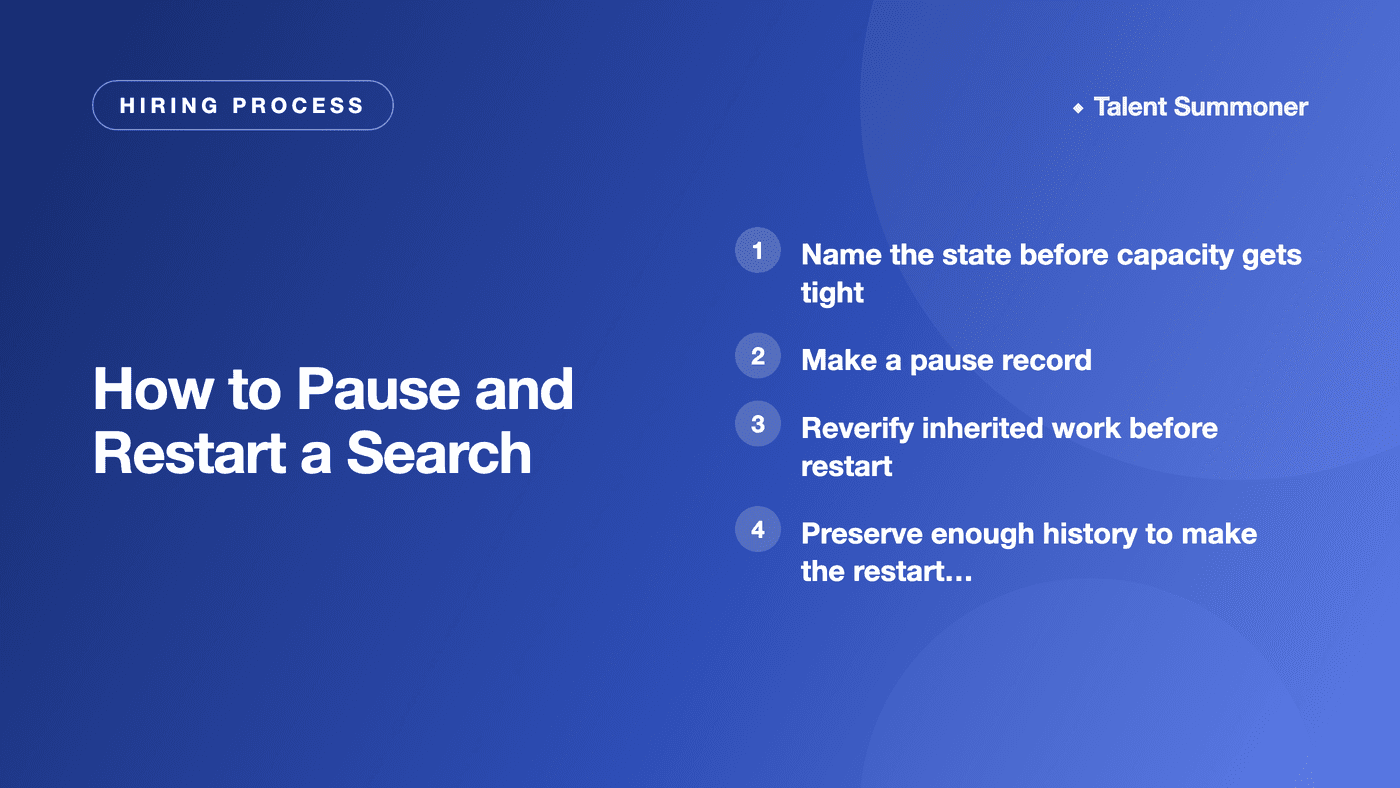
A practical runbook for pausing, merging or restarting a hiring search with a preserved record, evidence review and named owners.
Define time-to-fill with explicit start and end events, pause rules, mature cohorts, denominators, source controls and decision gates.
A practical runbook for choosing startup interview stages, assigning owners, testing evidence and fixing unnecessary steps in a distributed team.
A practical way to budget founder interview time for one role, with capacity inputs, delegation rules and stop conditions.
Design a high-volume hiring intake with role segmentation, evidence gates, capacity assumptions, candidate experience controls, owners and stop conditions.
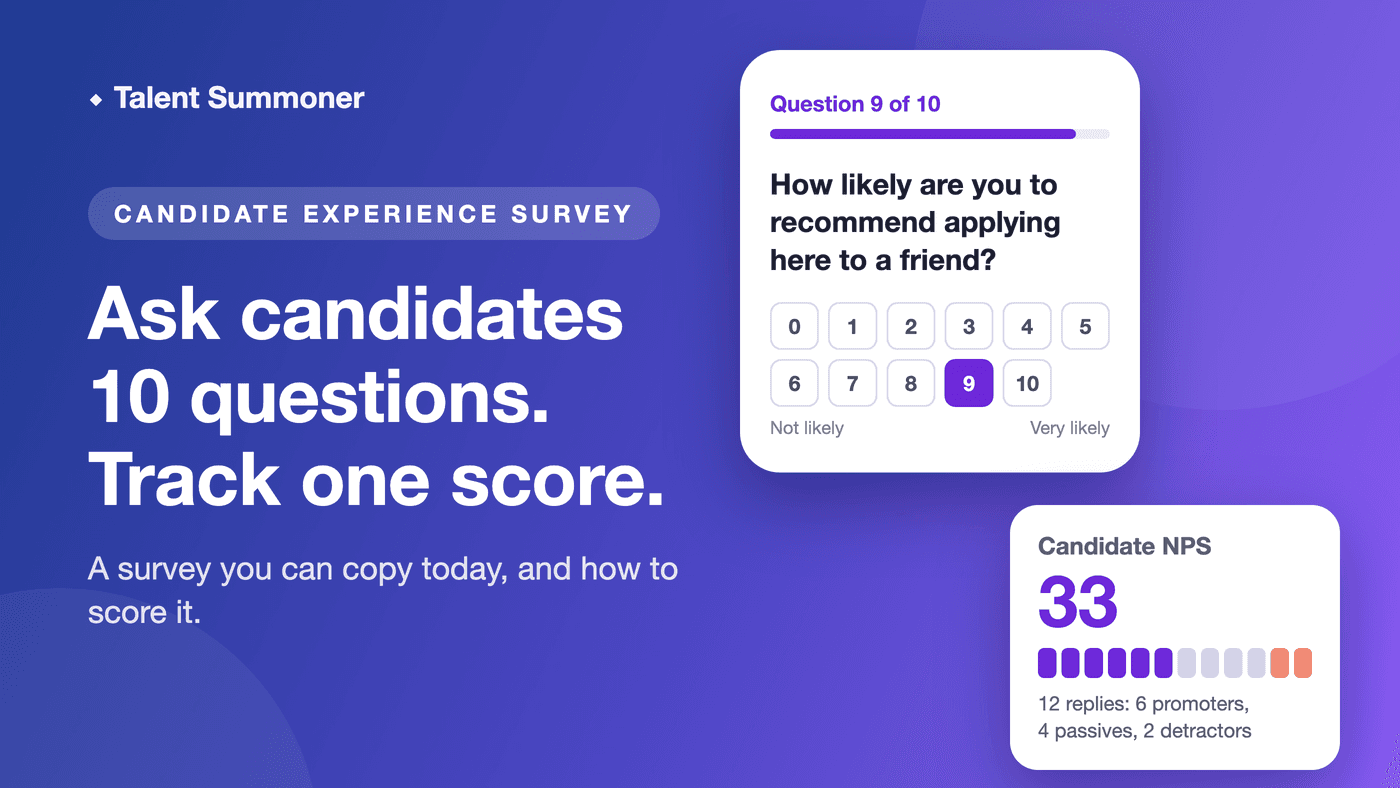
A copy-ready candidate experience survey template: 10 core questions, 20 more by hiring stage, how to score candidate NPS and when to send it.
Troubleshoot a distributed founding team's hiring process with explicit hand-offs, async review checks, evidence records and restart conditions.
Build a copyable hiring operations calendar for a two-person team, with weekly ownership, review gates, hand-offs and stop conditions.
A practical post-product-market-fit runbook for hiring a second employee, with role scope, ownership, evidence and hand-off checks.
Use a headcount plan change log to record demand changes, assumptions, approvals, owners, evidence and the next corrective action.
Use a copyable founder intake questionnaire to expose missing hiring inputs, assign owners and set stop conditions before sourcing one role.
Review a job description for job-related language, access, proxy risk, evidence and accountable human decisions before sourcing starts.
A privacy review guide for explaining AI recommendations plainly, protecting confidential details and keeping human review accountable.
Design an anonymised recruiting study with a clear question, data-minimisation plan, re-identification review, denominators, access controls and stop rules.
A practical applicant-funnel runbook for busy startup hiring managers, with simple stages, review questions, owners and stop conditions.