 Talent Summoner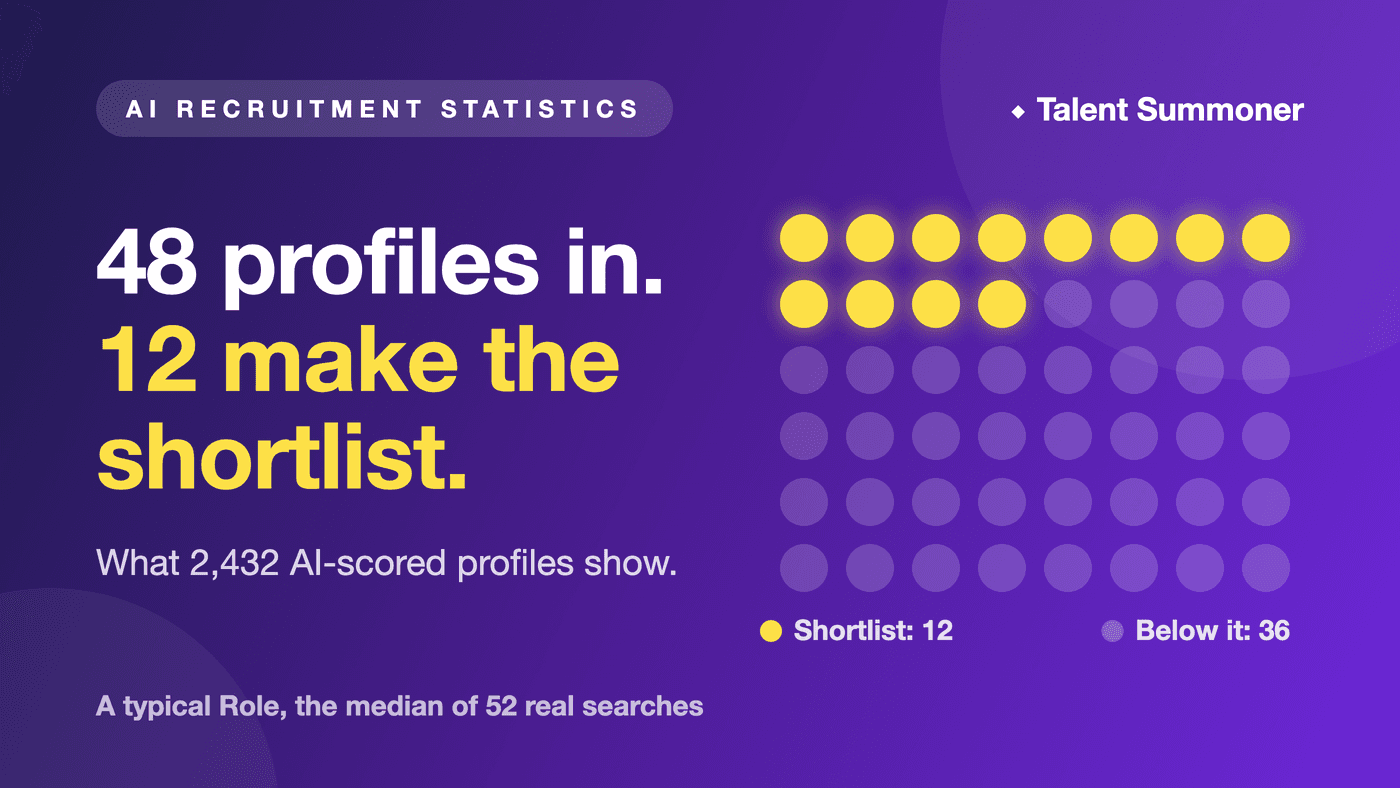
AI Recruitment Statistics: What 2,432 AI-Scored Profiles Show
You don't need 200 candidates. Across 52 real searches, our AI pulled in about 48 profiles per role and shortlisted about 12.
Latest news and updates from our team
You don't need 200 candidates. Across 52 real searches, our AI pulled in about 48 profiles per role and shortlisted about 12.
Sourcing in recruitment means finding and contacting people who have not applied yet. See how it differs from recruiting, the steps and a worked example.

LinkedIn x-ray search strings by role, tested on Google on 3 October 2026: what page one returned, where the results fell apart, and how to fix each string.
A copyable template for organising several open roles without forcing candidates into one score, one owner or one next action.
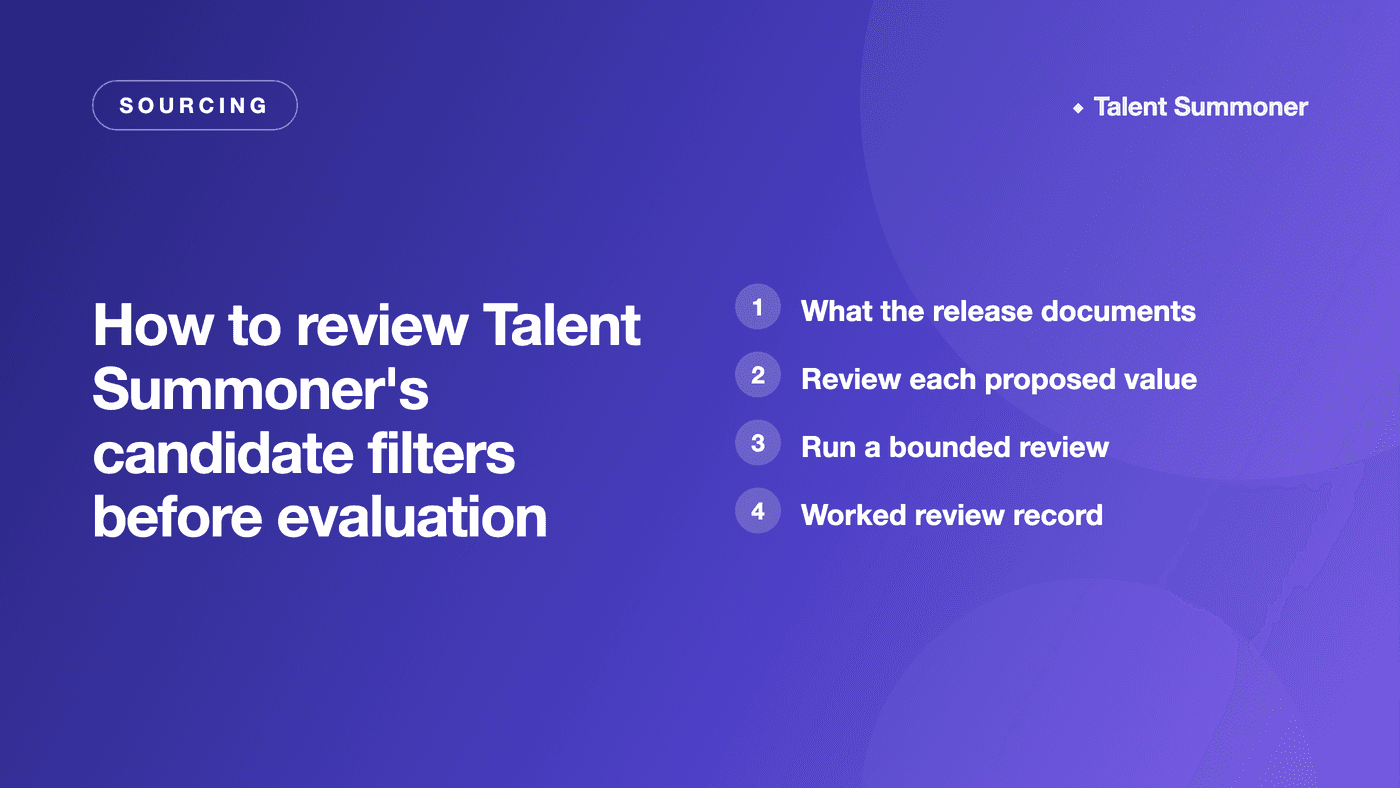
A practical guide to checking agent-proposed minimum score, source and city-level filters before a Talent Summoner search is evaluated.
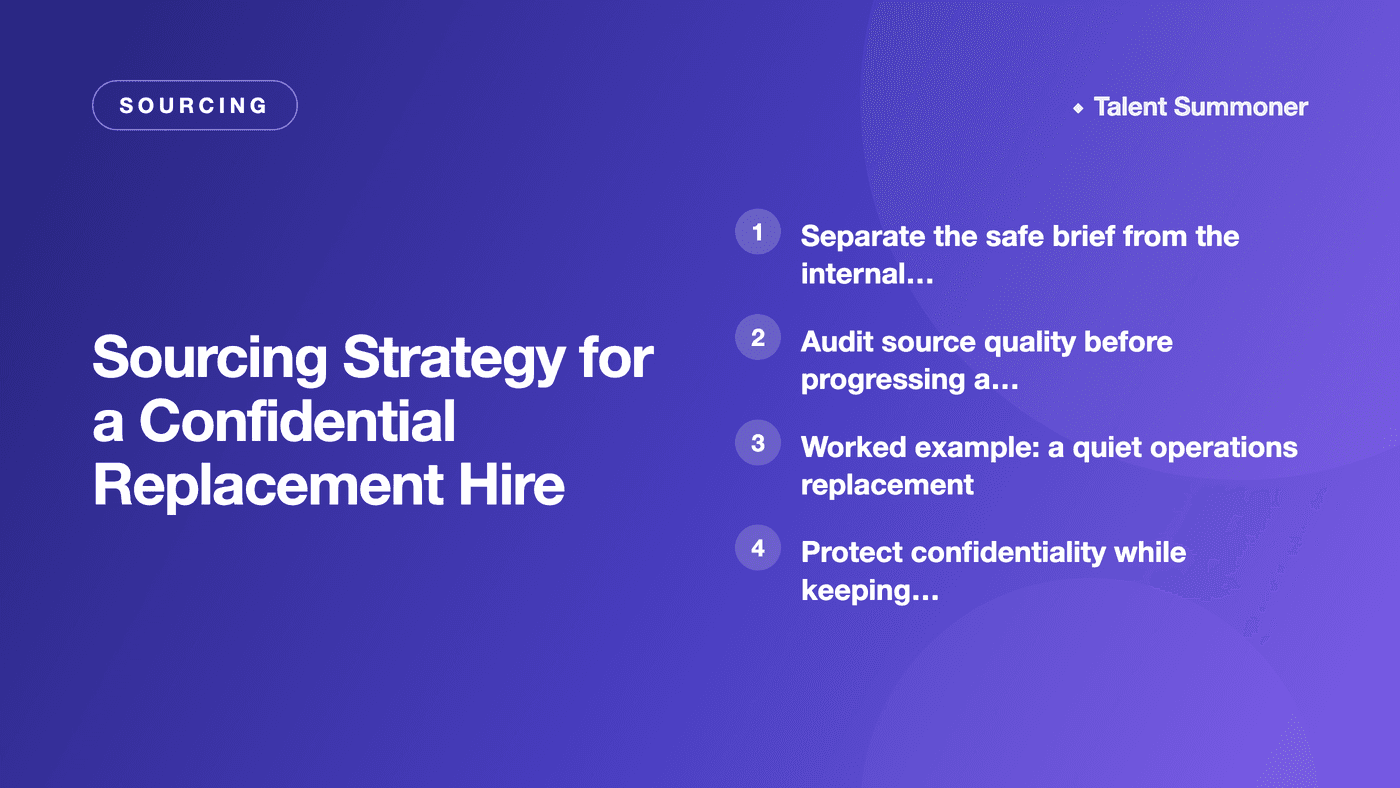
Adapt a sourcing strategy for a confidential replacement hire with a neutral brief, source-quality audit and explicit evidence limits.
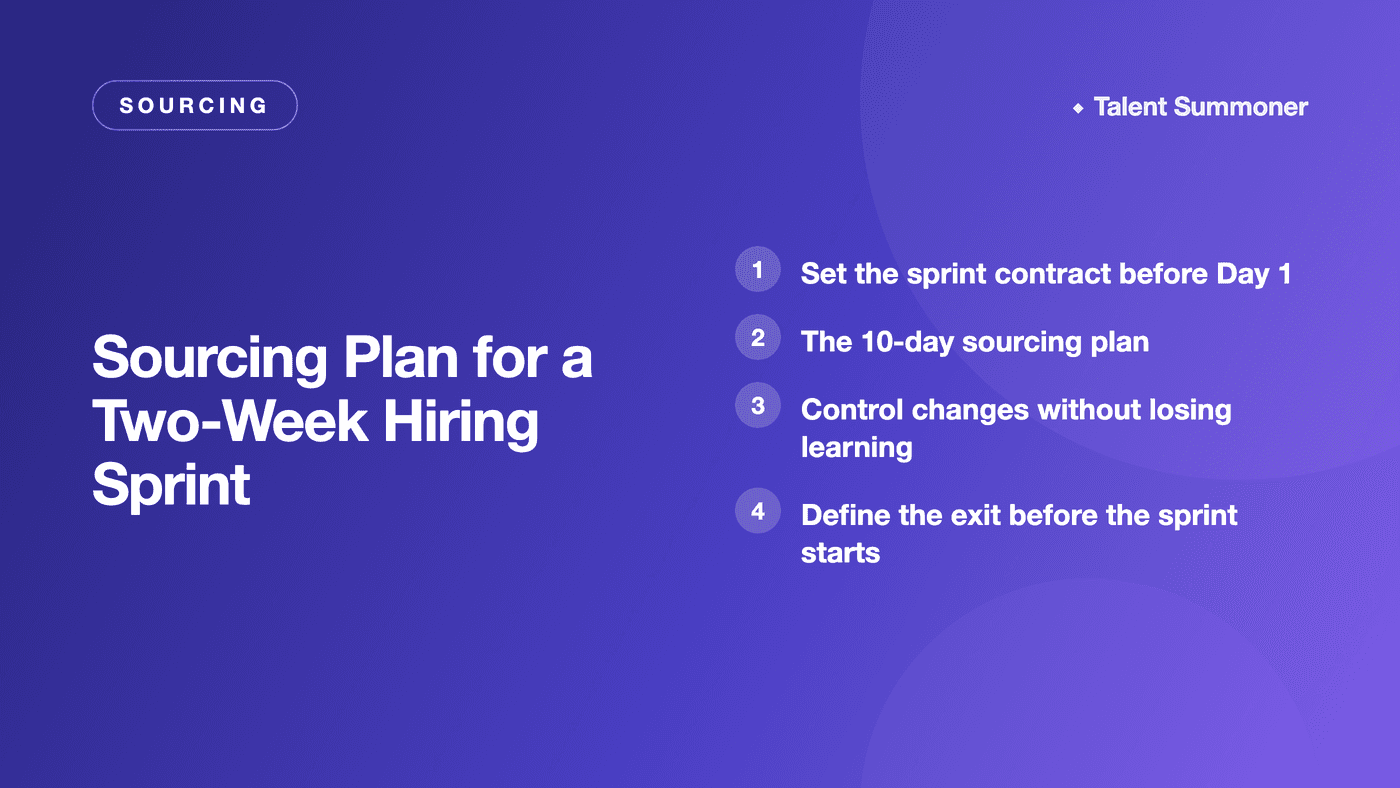
Run a focused two-week sourcing sprint in a new market with daily checkpoints, scope controls and clear exit decisions.
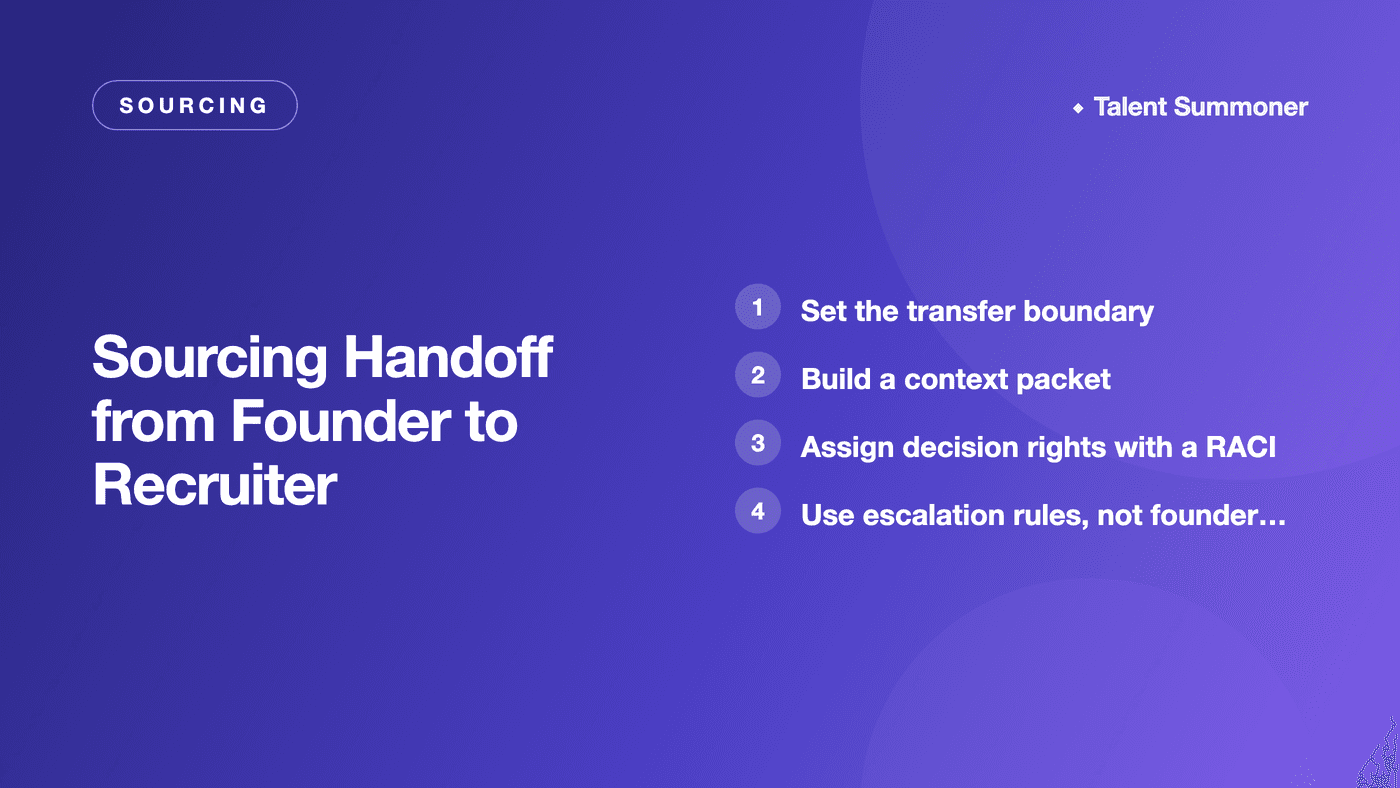
Transfer a founder-led sourcing effort to recruiter ownership with a context packet, decision rights, evidence handoff and first-week acceptance checks.
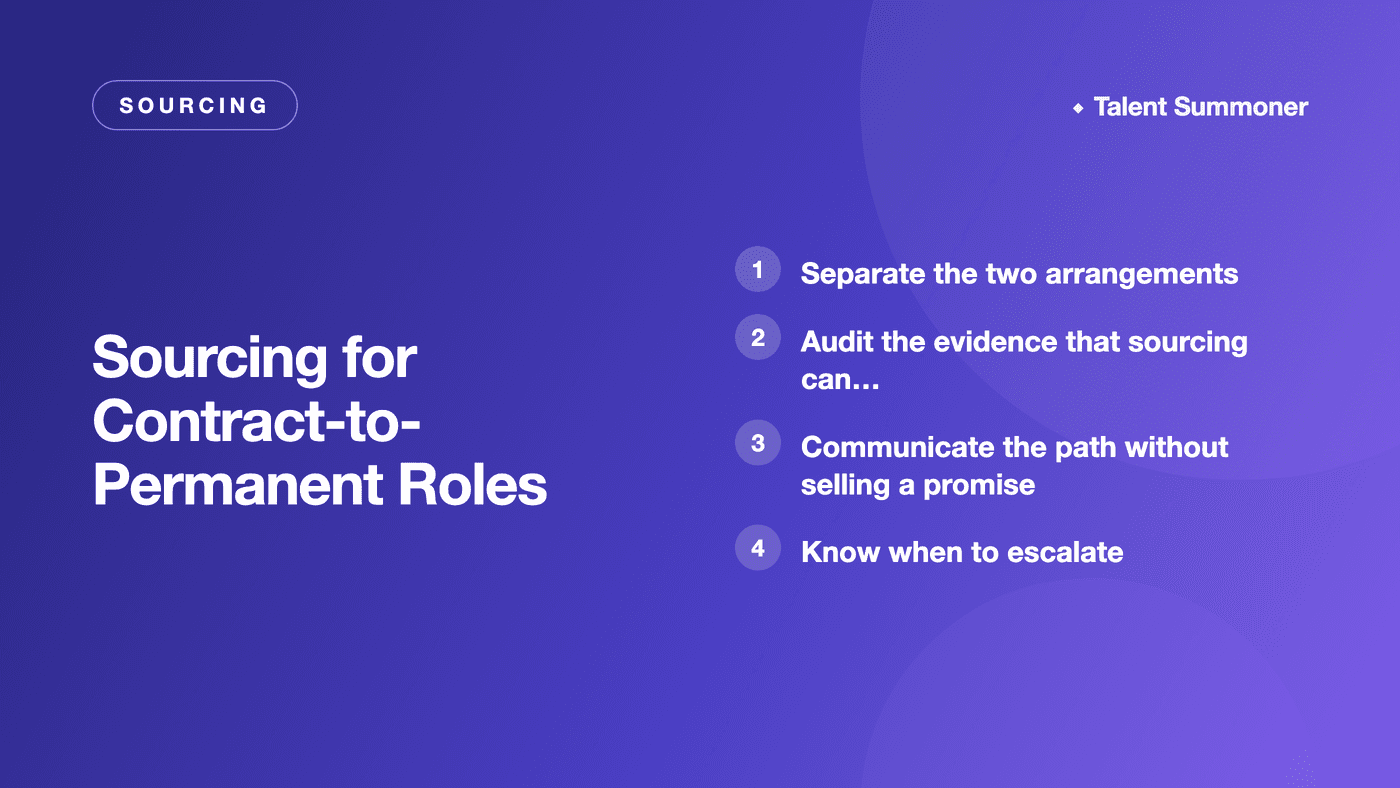
Source contract-to-permanent roles with clear status assumptions, evidence needs, candidate communication and HR or legal escalation points.
Diagnose an empty candidate search before rerunning it: separate brief defects, market constraints, evidence gaps and scope changes.
A founder's runbook for classifying stale candidate records, choosing a safe reactivation path, documenting unknowns and knowing when to stop.
A practical worksheet for choosing sourcing channels by role fit, evidence quality, reach, review capacity and clear stop rules.
A practical method for translating role skills into observable public signals, labelling uncertainty and fixing weak sourcing mappings.
Turn a vague sourcing assumption into a testable candidate discovery hypothesis with evidence thresholds, falsification checks and a clear next action.
Use a claim-level freshness check before candidate outreach, with a simple evidence record, stop rules and human review for uncertainty.
Copy an audit that separates sourcing assumptions from evidence, samples records consistently, assigns owners and sets a new-market go/no-go.
A founder's guide to candidate sourcing funnel stages, with the right input, owner, decision and stop condition for one urgent role.
Create a candidate research brief before entering a new market, with testable assumptions, evidence limits, one owner and a clear stop condition.
A practical review checklist for using portfolio evidence in candidate discovery, finding failure signals and choosing the next human check.
Run a practical candidate discovery retrospective with evidence, decision prompts and owners for the next sourcing pass.
A planning playbook for combining employee referrals with outbound sourcing, assigning ownership, resolving duplicates and reviewing evidence.
See why recruitment keyword matching misses relevant evidence, where it still helps, and how to combine it with controlled human review.
Learn what AI candidate sourcing automates, where human judgement remains essential, and how to review an AI-generated shortlist responsibly.
Seven Hong Kong technical sourcing channels, compared by the evidence each produces, the consent it implies and what it cannot tell you.