 Talent Summoner
How to prevent evaluation-data leakage in candidate-ranking tests
Use a fixed split, train-only transformations and a small synthetic fixture to keep candidate-ranking evaluation results honest.
Latest news and updates from our team
Use a fixed split, train-only transformations and a small synthetic fixture to keep candidate-ranking evaluation results honest.
When should an internal-mobility lead override an automated recommendation? Use this guide to document the evidence and next step.
Upload a job description and CVs, inspect the ranked report, then share a link or PDF so teammates can review without an account.
Use this shortlist review meeting agenda to test candidate evidence, expose assumptions, assign follow-ups and record a human-owned next step.
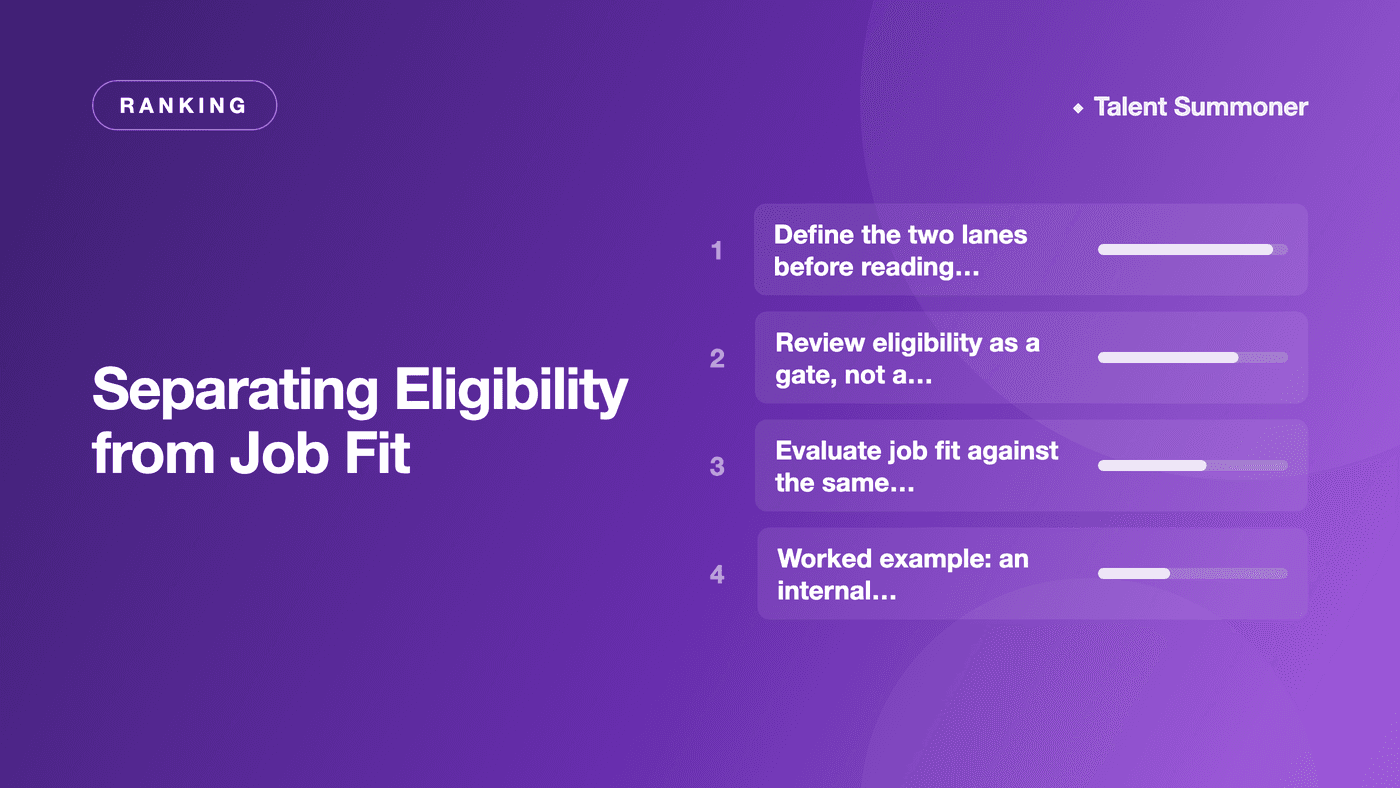
A worked guide for internal-mobility reviews that separates eligibility gates from job-fit evidence and assigns a clear next action.
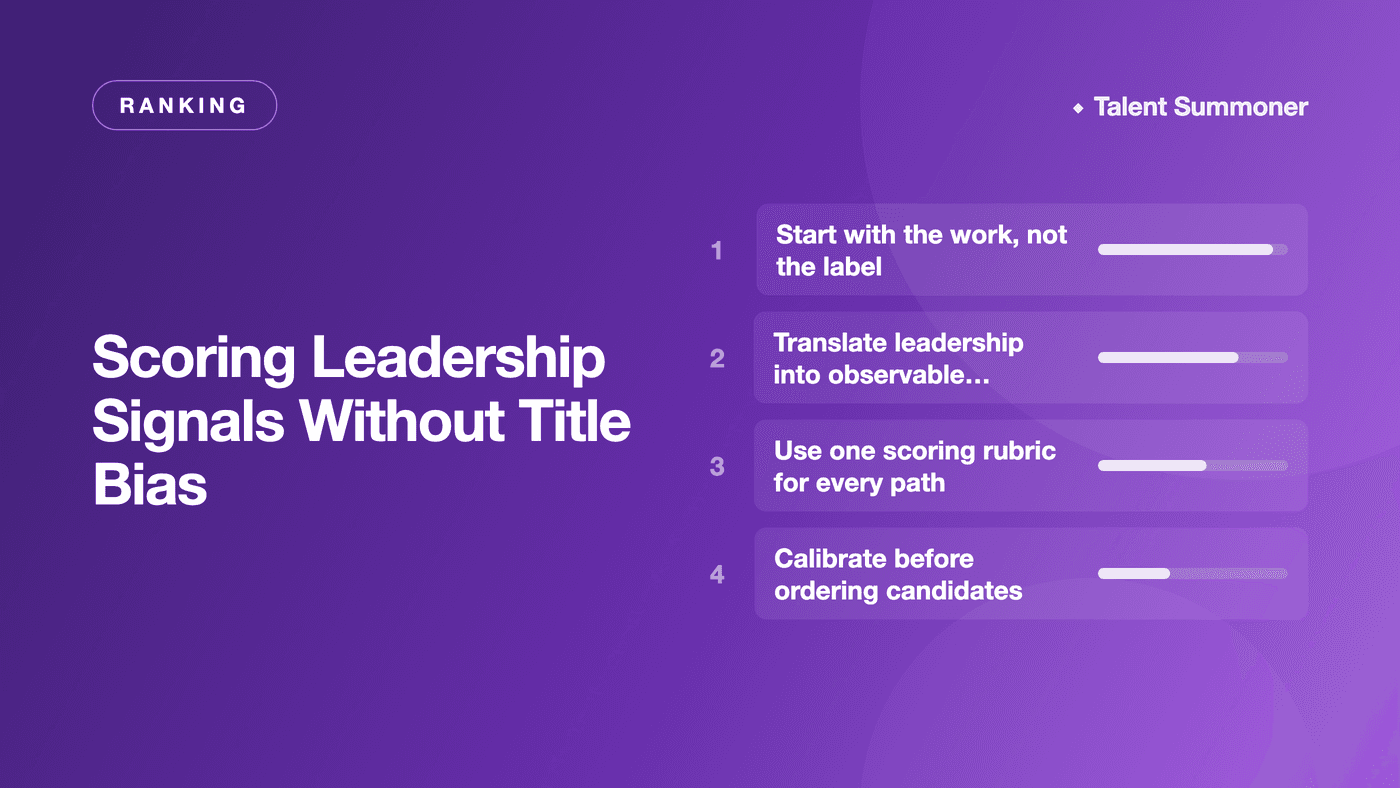
A practical guide to evaluating leadership through observable work evidence, using the same role criteria for managers and individual contributors.
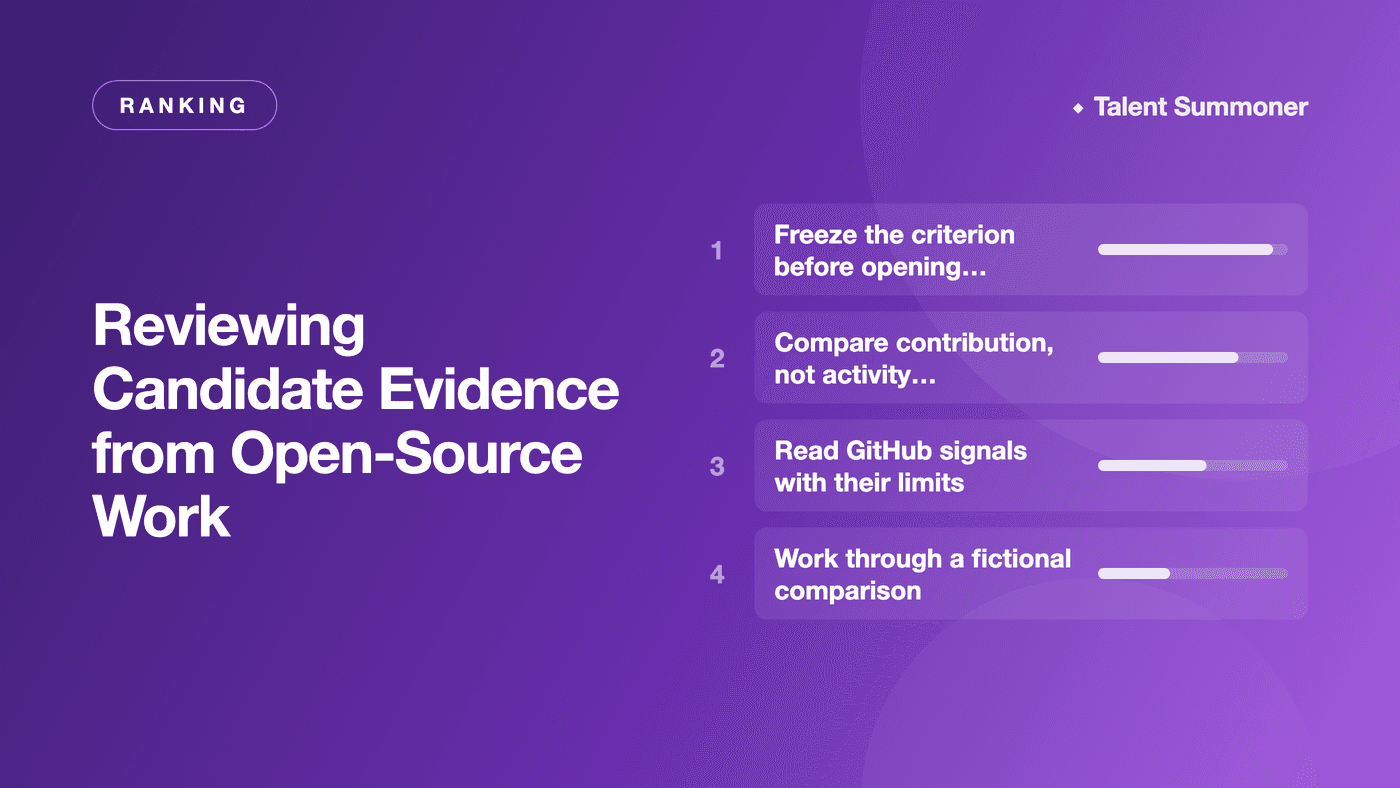
A decision guide for comparing open-source work across a close shortlist, separating visible evidence from assumptions and choosing the next check.
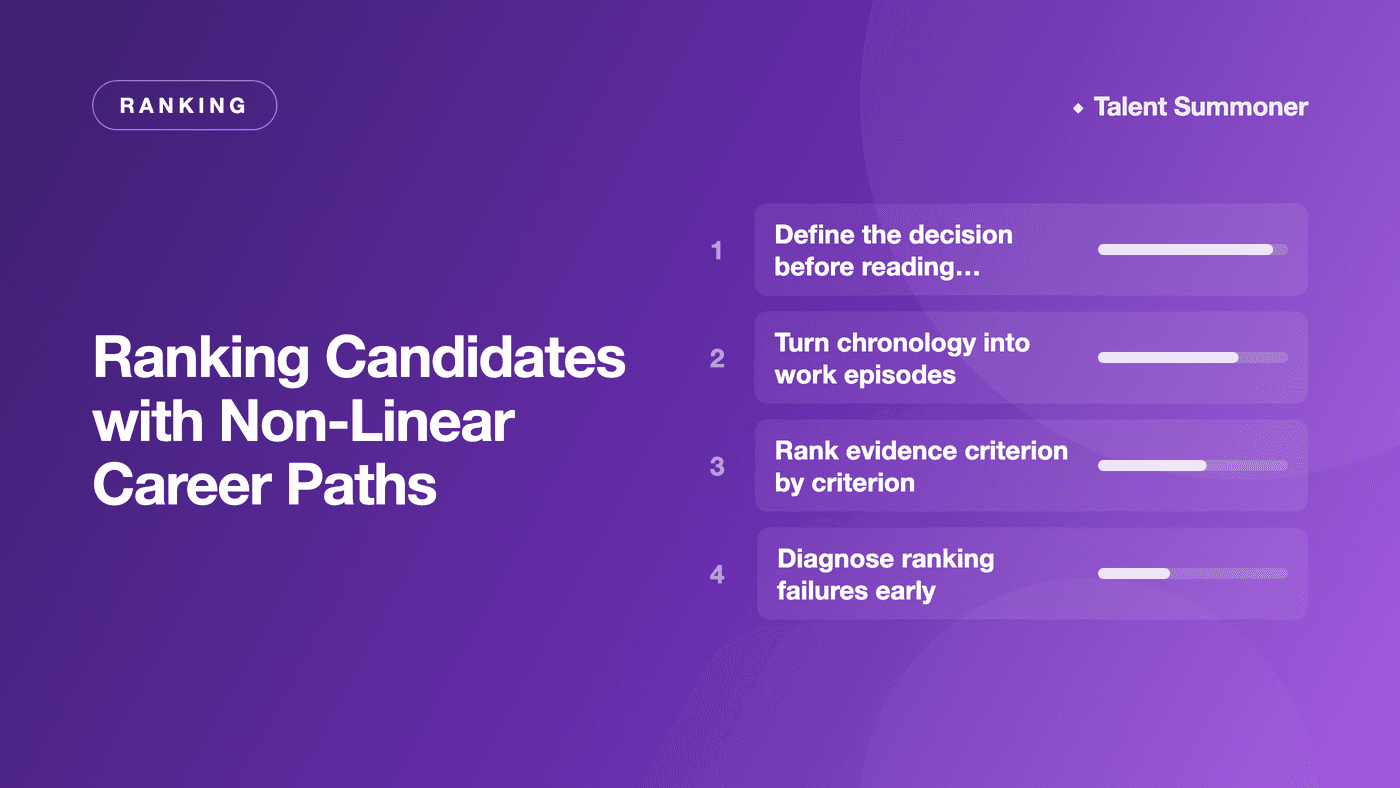
A practical runbook for reviewing non-linear career paths, separating chronology from evidence and correcting ranking failures before a decision.
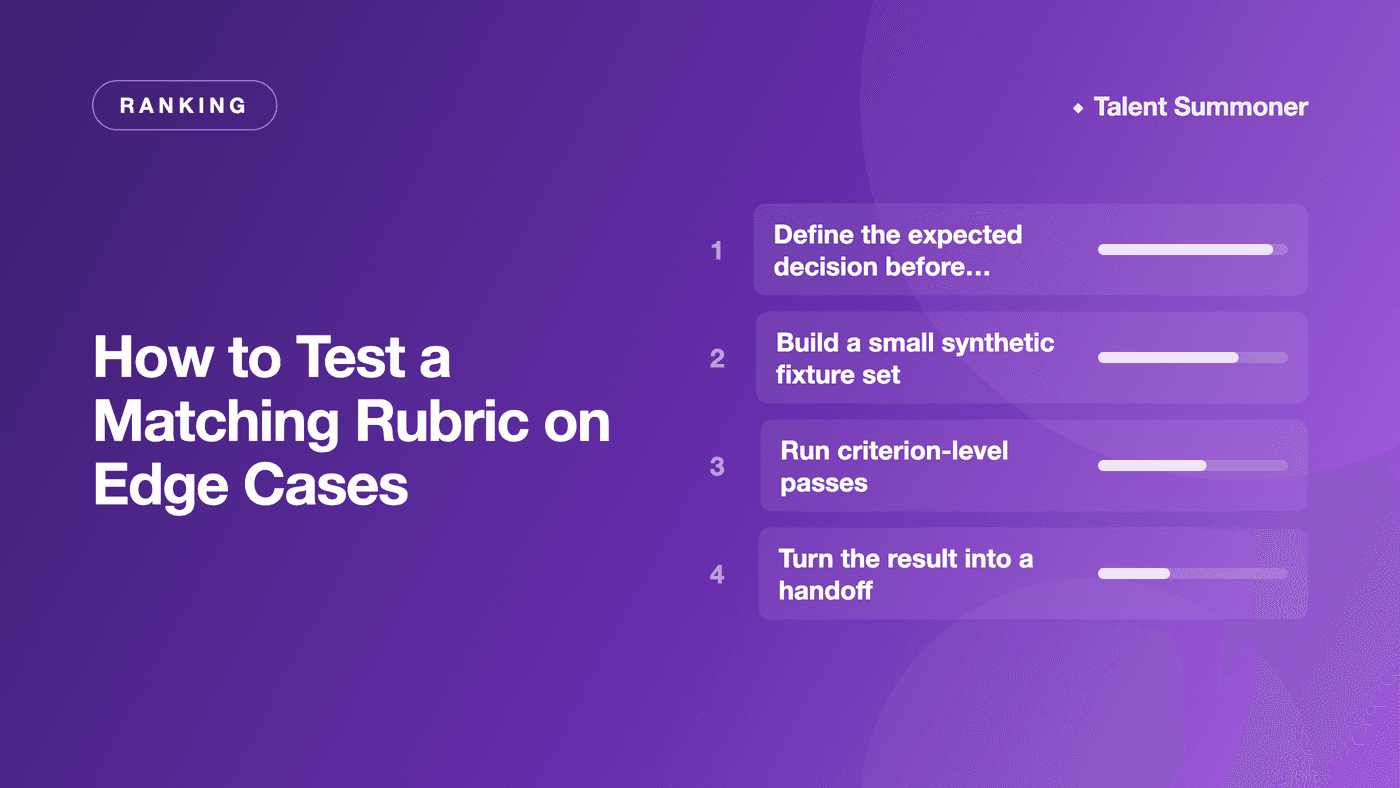
Use synthetic edge cases to test a candidate matching rubric, expose rule failures and hand off a human-owned correction before reviewing a close shortlist.
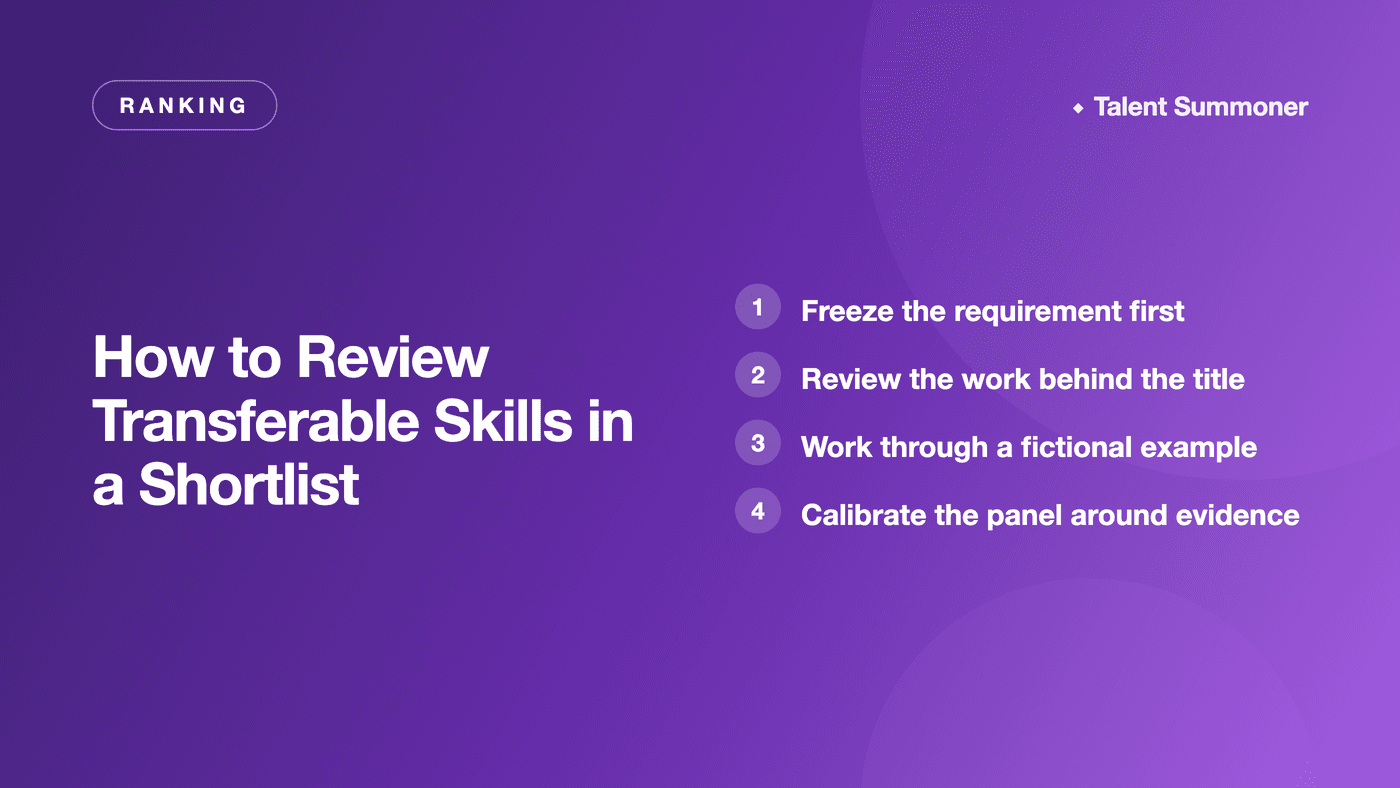
A panel-ready method for comparing transferable skills in a shortlist, separating evidence from assumptions and recording the next check.
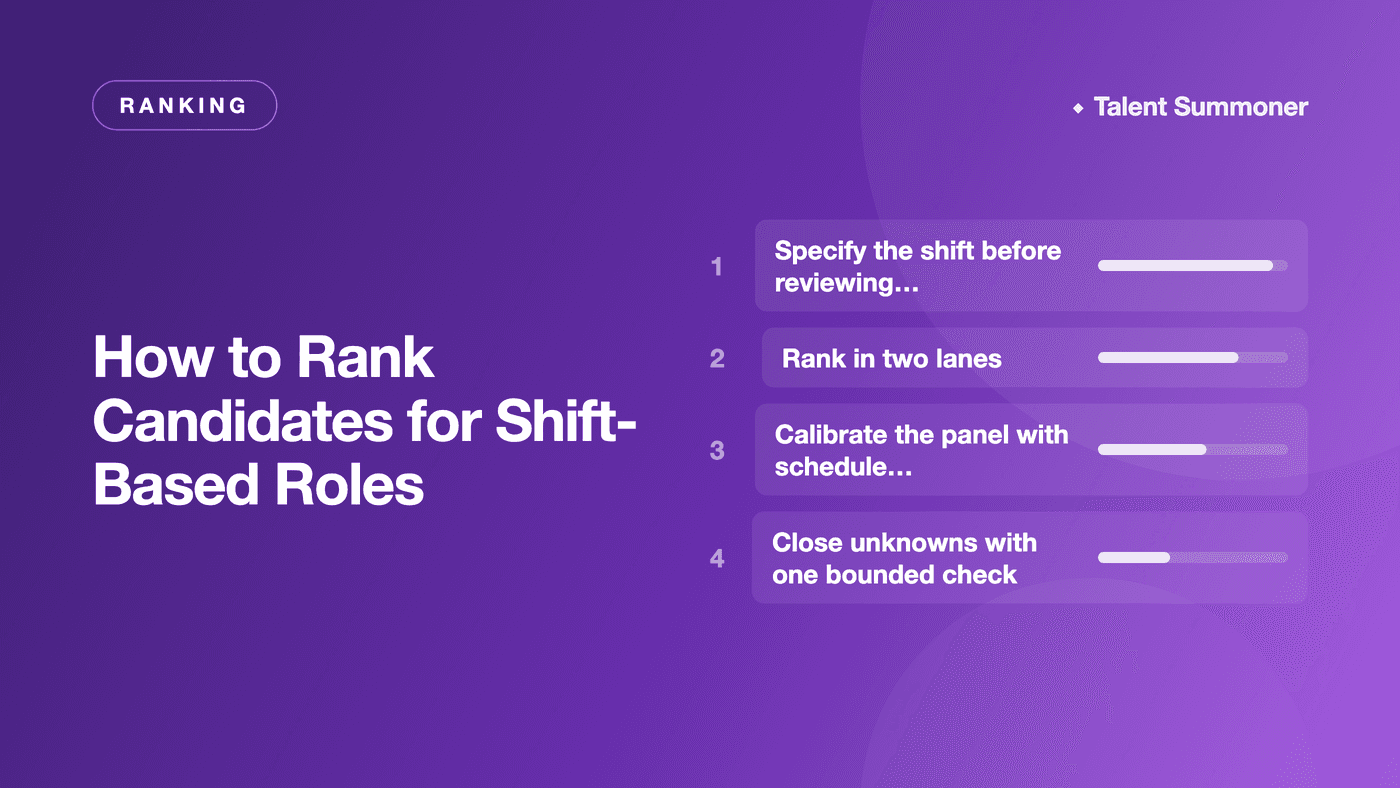
A practical guide to separating shift requirements from skill evidence, calibrating a panel and recording schedule checks without guessing availability.
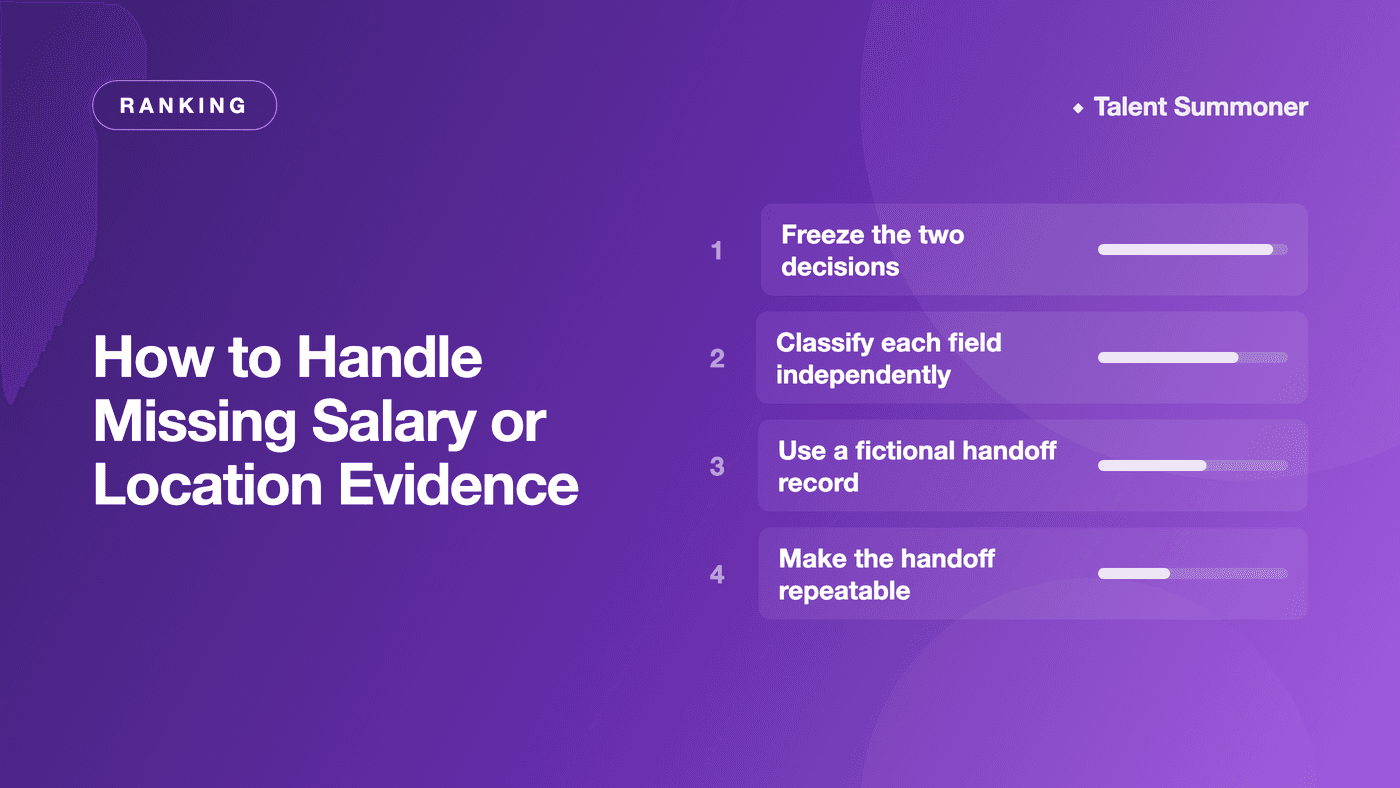
A practical handoff for reviewing missing salary and location evidence separately, recording uncertainty and assigning a consistent verification step.
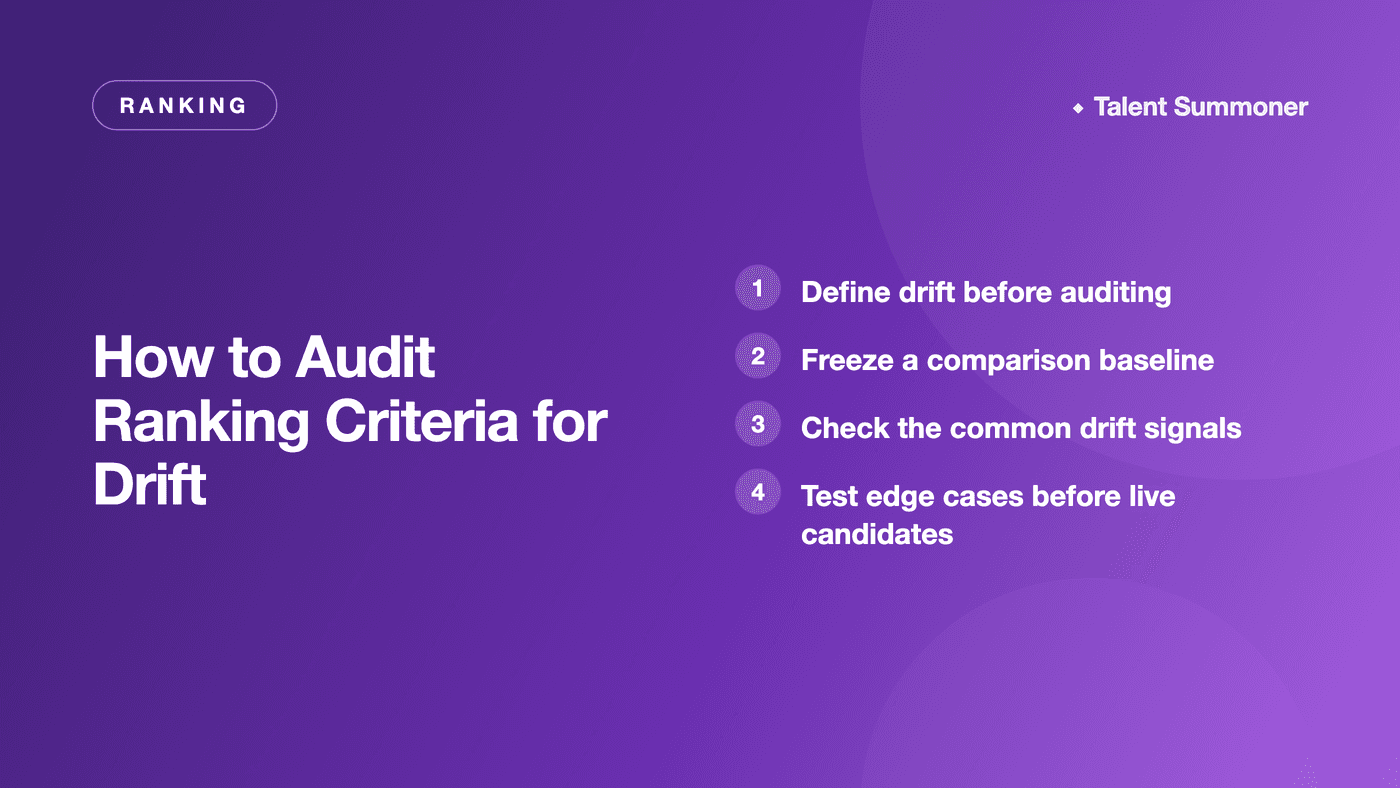
A practical runbook for finding silent changes in ranking criteria, testing edge cases and assigning an owner before acting on a shortlist.
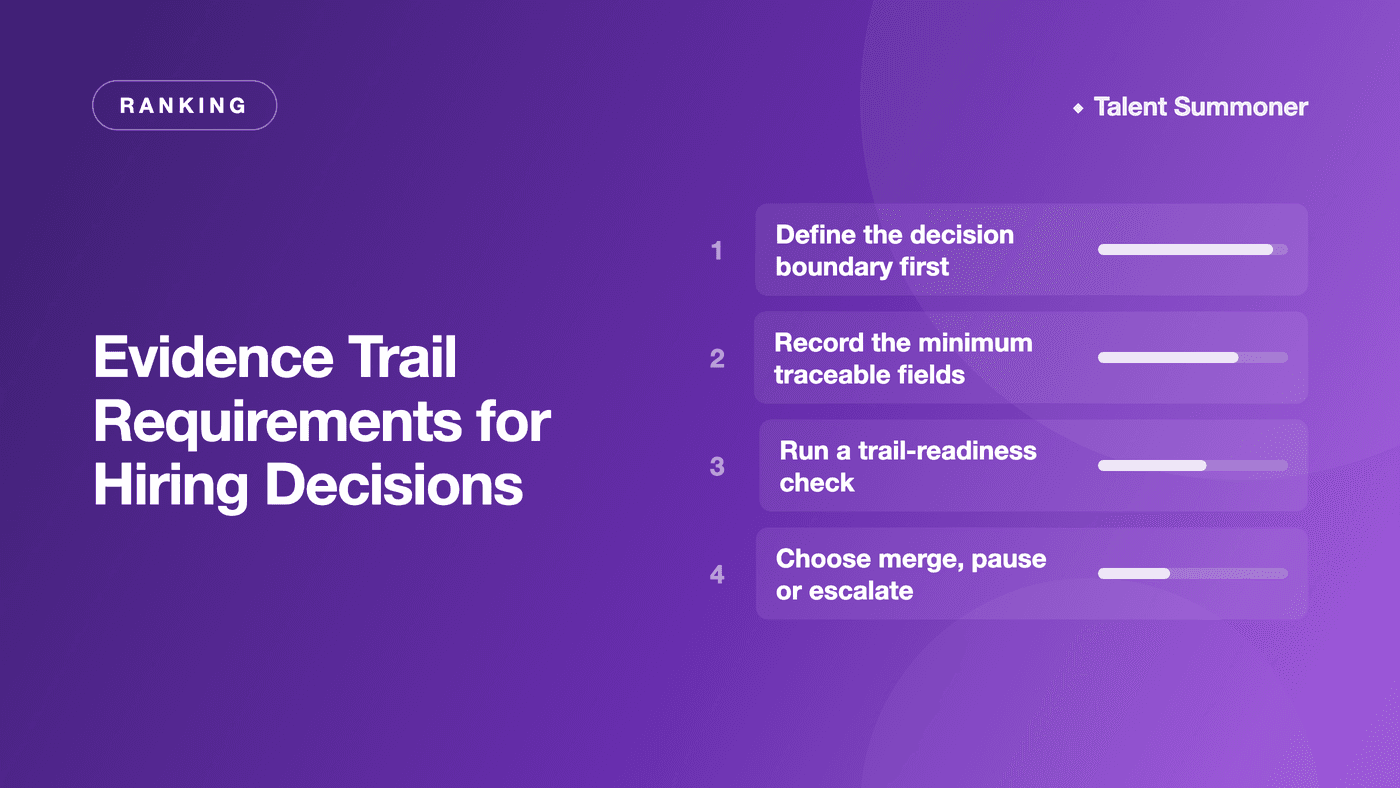
Define an evidence trail for hiring decisions with source checks, versioned criteria and merge, pause or escalate gates for ranking reviews.
Build an evidence matrix that compares finalists against the same criteria, keeps unknowns visible and assigns the next human-owned check.
Use a decision log for shortlist changes to record evidence, approvals, reruns and the human-owned reason for every ranking update.
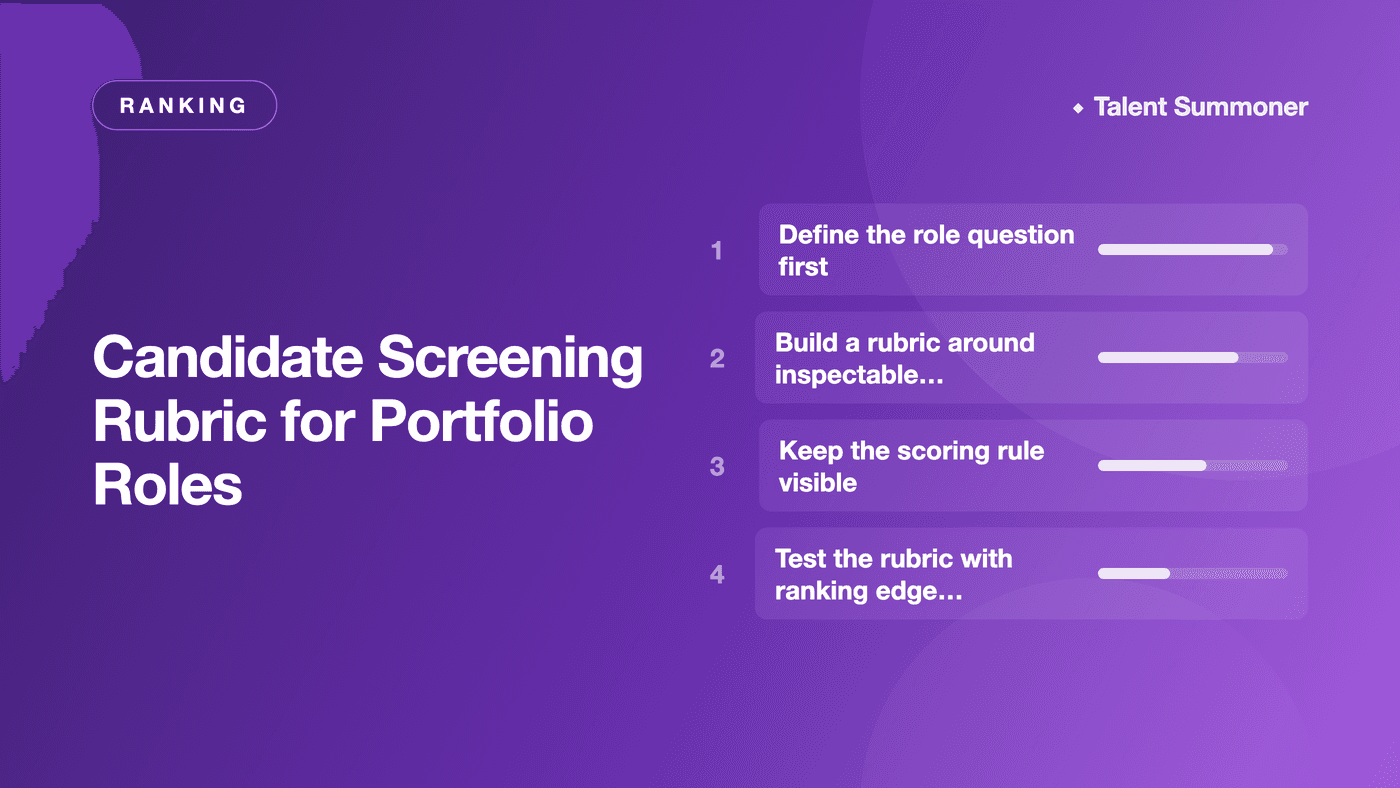
Build a portfolio-role screening rubric that separates job criteria from polish, keeps missing evidence visible and gives reviewers consistent next checks.
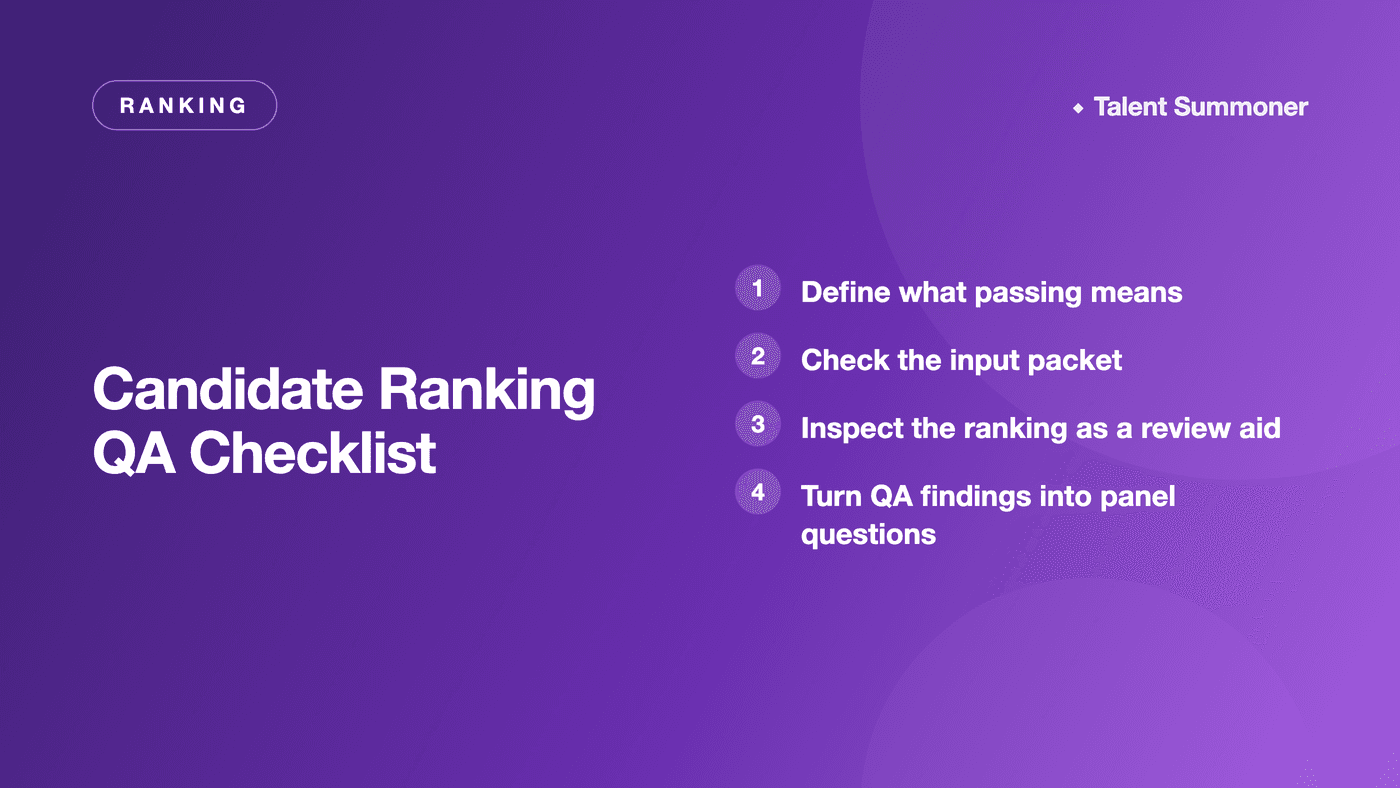
A practical candidate ranking QA checklist for panels: verify the role brief, candidate packet, evidence trail and review questions before calibration.
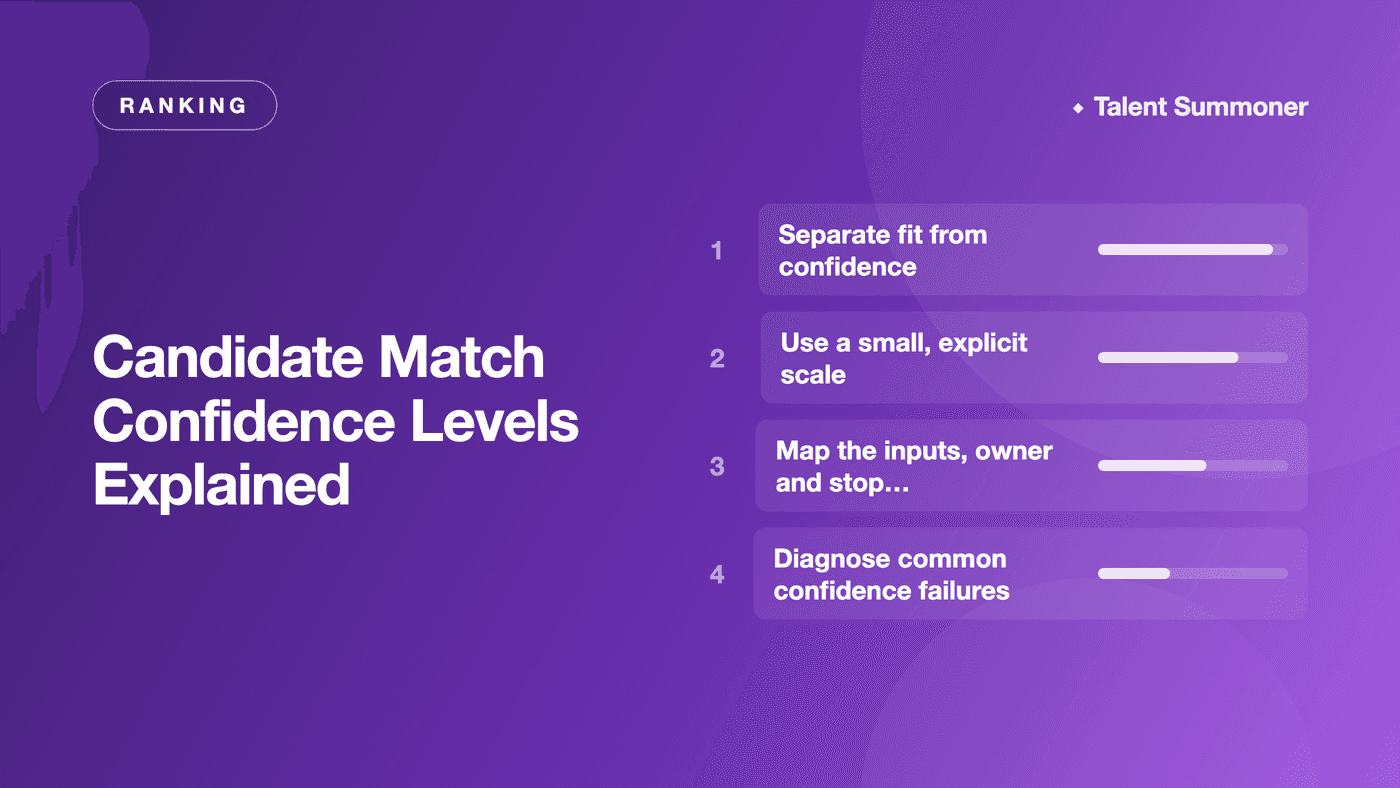
A practical guide to candidate match confidence levels: separate evidence strength from fit, assign review owners and set stop conditions.
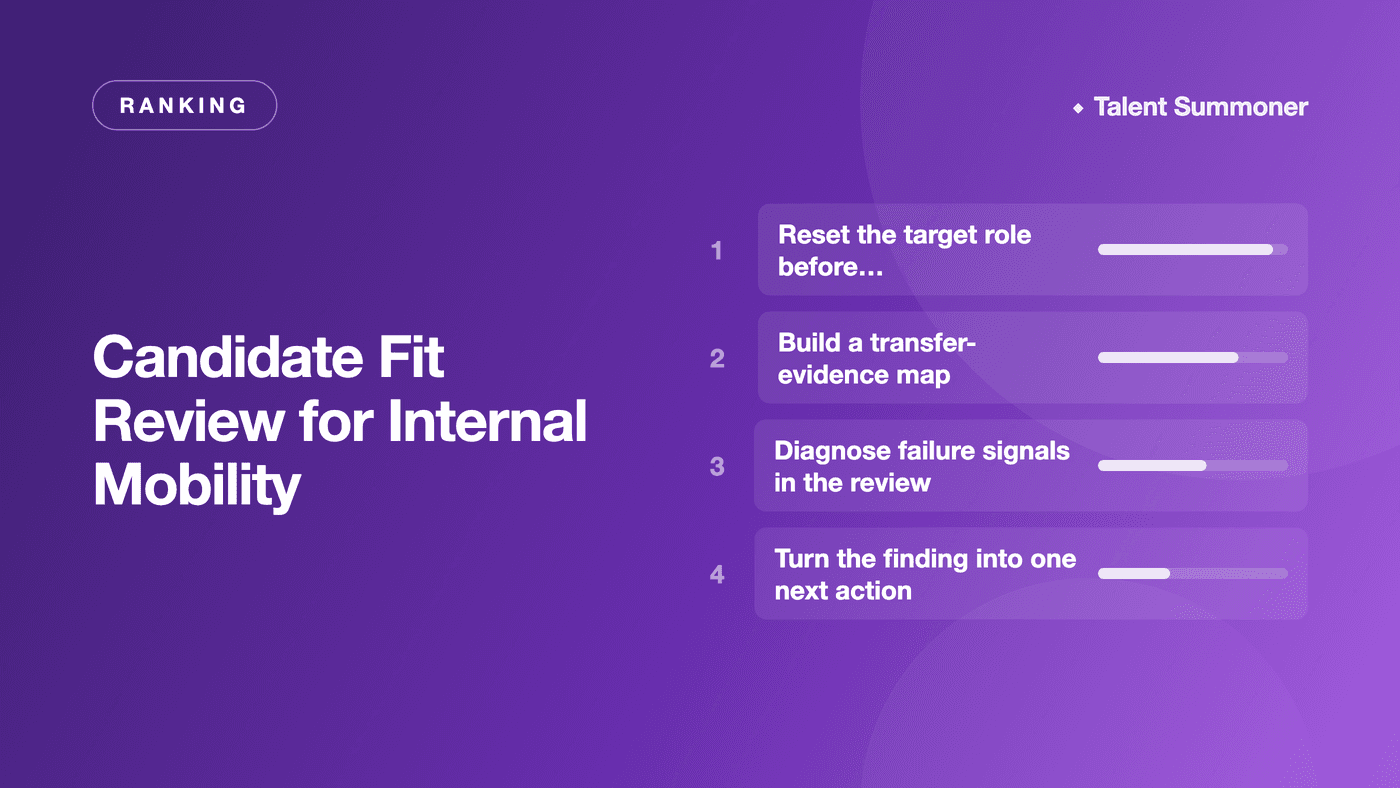
Review internal candidates against a new role with a transfer-evidence map, failure signals and a clear next action.

Use a candidate comparison worksheet to capture independent panel ratings, resolve evidence disagreements and record a human-owned next step.
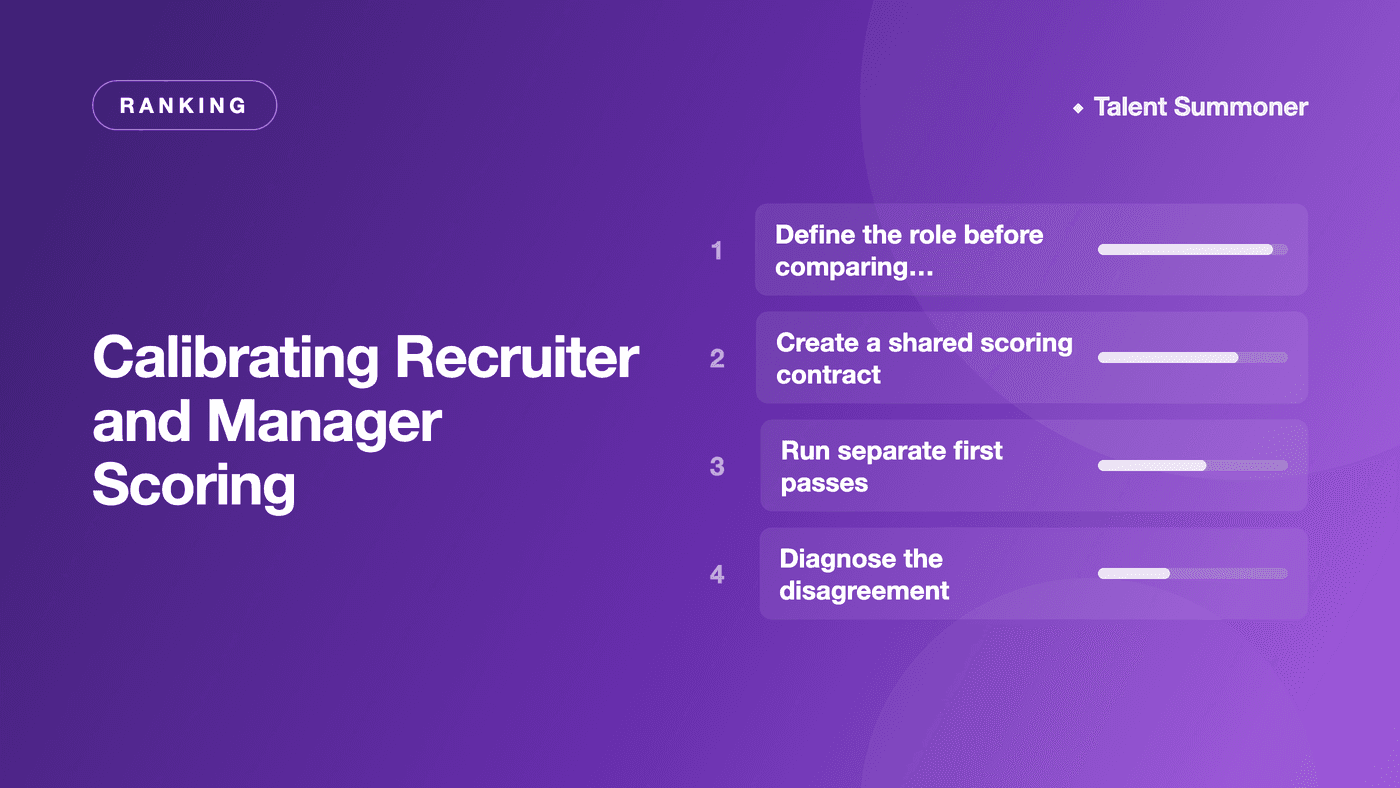
A decision guide for aligning recruiter and hiring manager scores around observable evidence, shared criteria and a human-owned next step.

Learn how coverage, relevance, evidence, route diversity, duplicate control and reviewer capacity shape candidate shortlist quality.
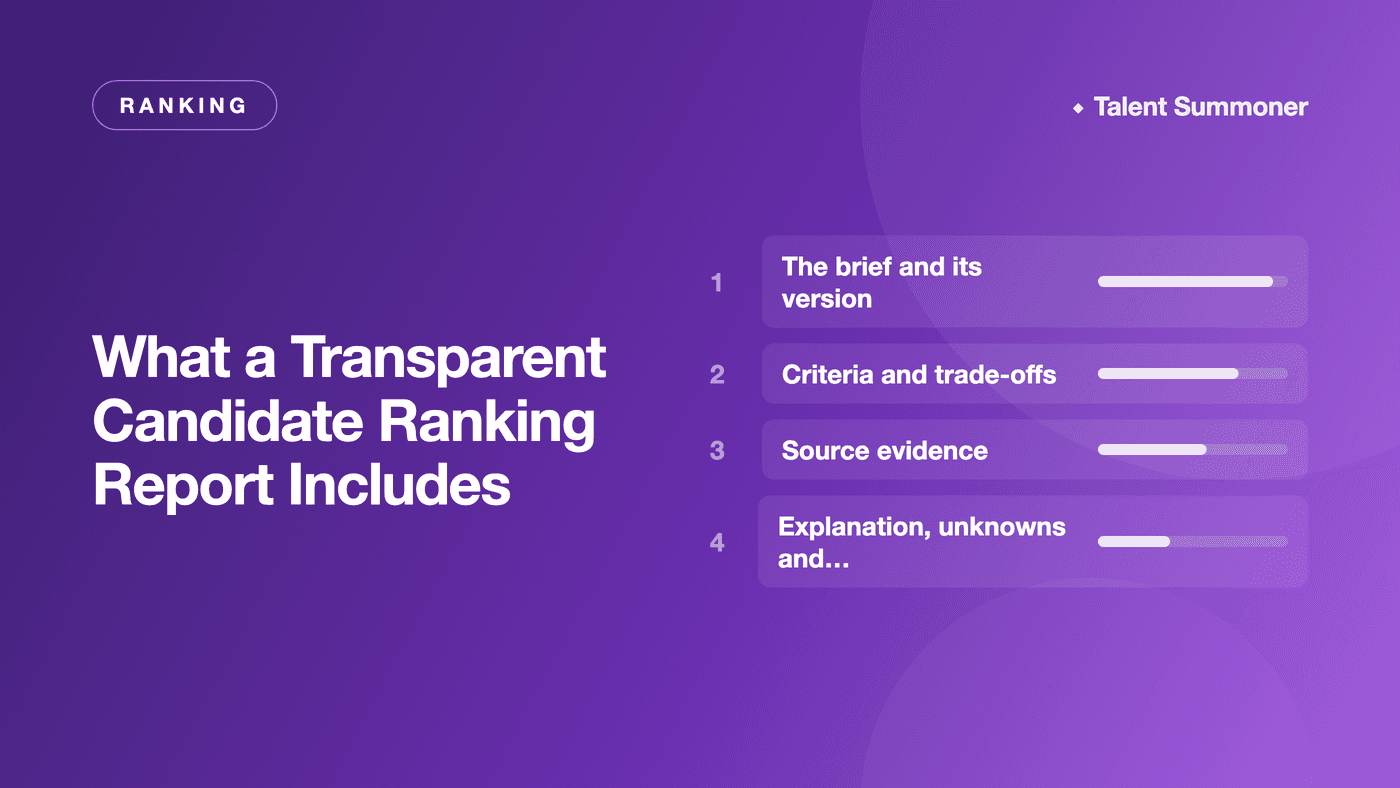
Learn which evidence, criteria, uncertainty, ordering and review details a transparent candidate ranking report should show.