 Talent Summoner
How to Map Skills to Public Candidate Signals
A practical method for translating role skills into observable public signals, labelling uncertainty and fixing weak sourcing mappings.
Latest news and updates from our team
A practical method for translating role skills into observable public signals, labelling uncertainty and fixing weak sourcing mappings.
A practical handoff for reviewing missing salary and location evidence separately, recording uncertainty and assigning a consistent verification step.
Turn a vague sourcing assumption into a testable candidate discovery hypothesis with evidence thresholds, falsification checks and a clear next action.
A practical runbook for finding silent changes in ranking criteria, testing edge cases and assigning an owner before acting on a shortlist.
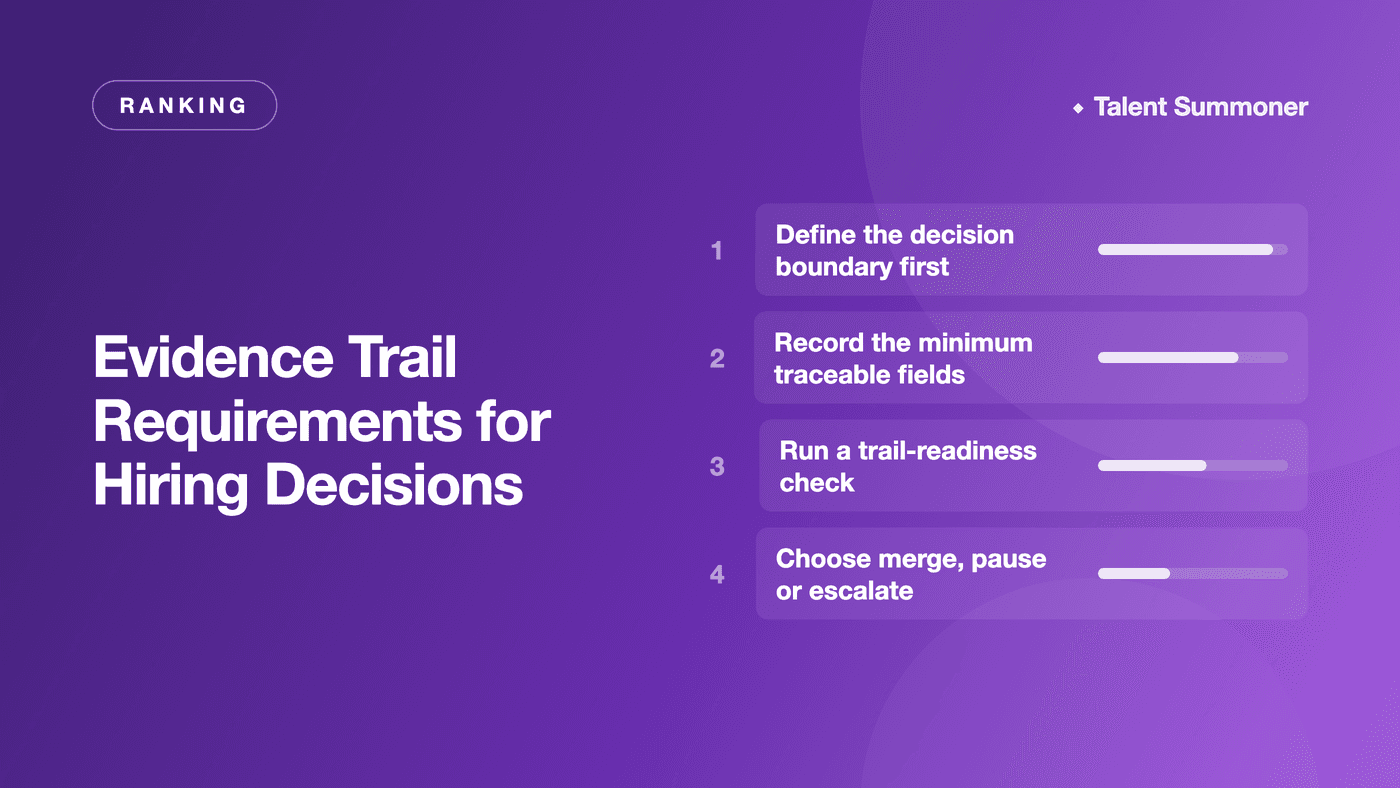
Define an evidence trail for hiring decisions with source checks, versioned criteria and merge, pause or escalate gates for ranking reviews.

Build an evidence matrix that compares finalists against the same criteria, keeps unknowns visible and assigns the next human-owned check.
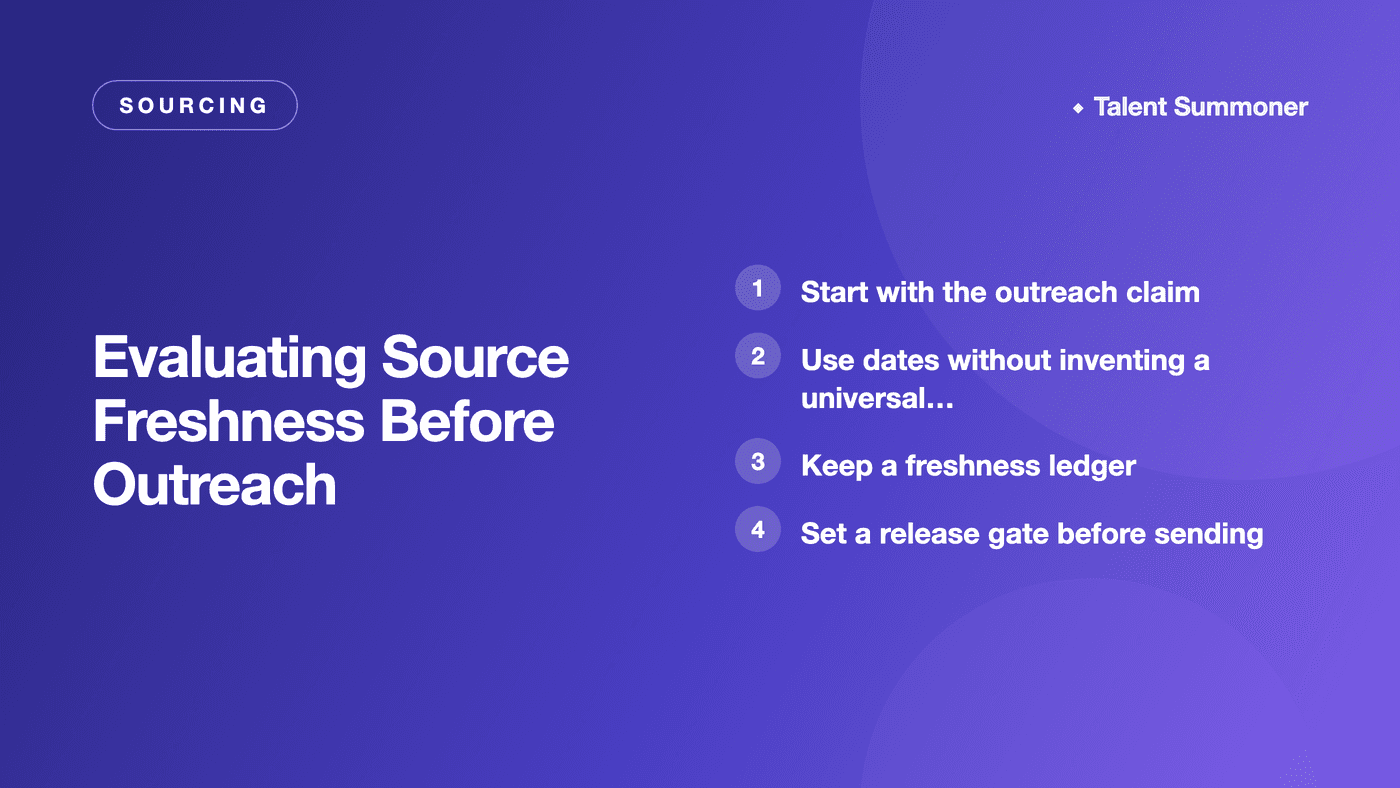
Use a claim-level freshness check before candidate outreach, with a simple evidence record, stop rules and human review for uncertainty.

Use a decision log for shortlist changes to record evidence, approvals, reruns and the human-owned reason for every ranking update.
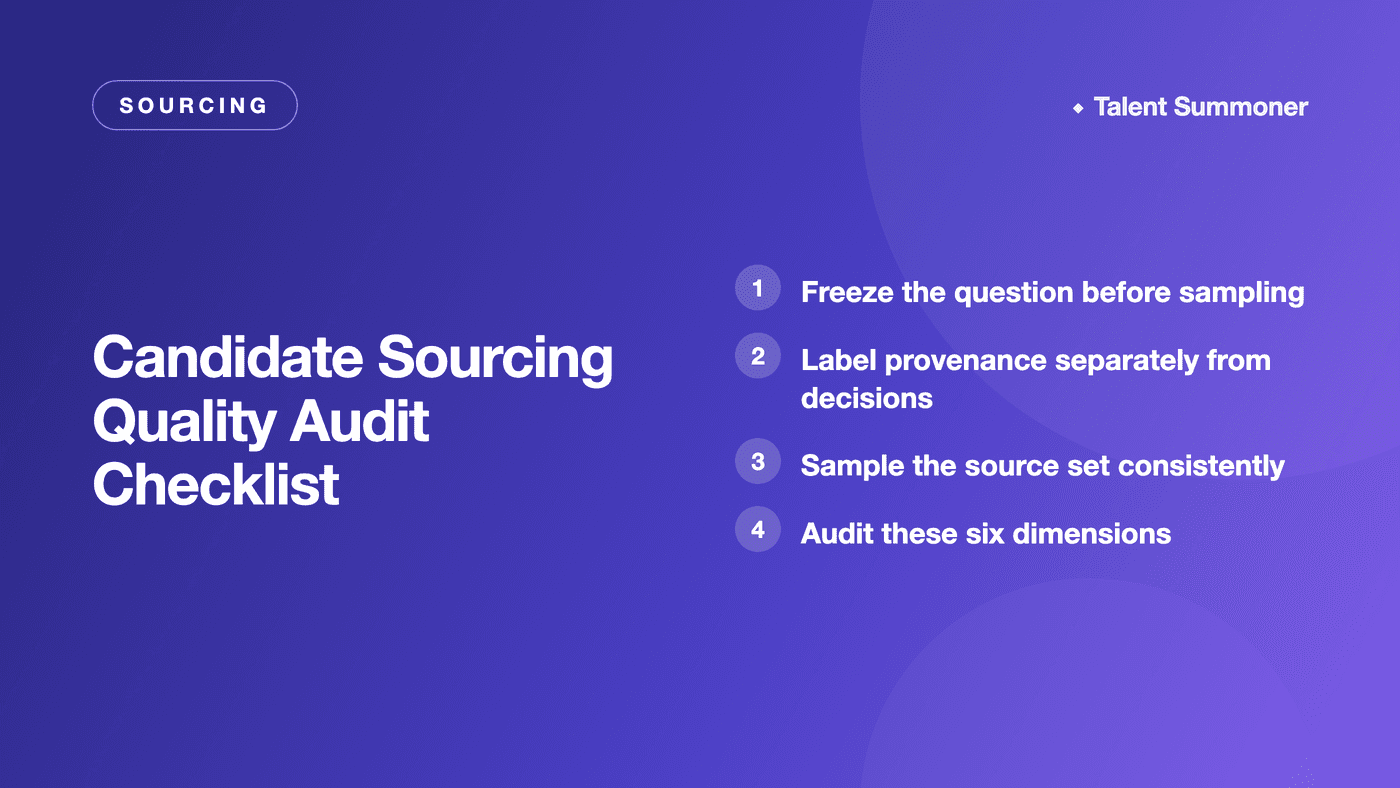
Copy an audit that separates sourcing assumptions from evidence, samples records consistently, assigns owners and sets a new-market go/no-go.
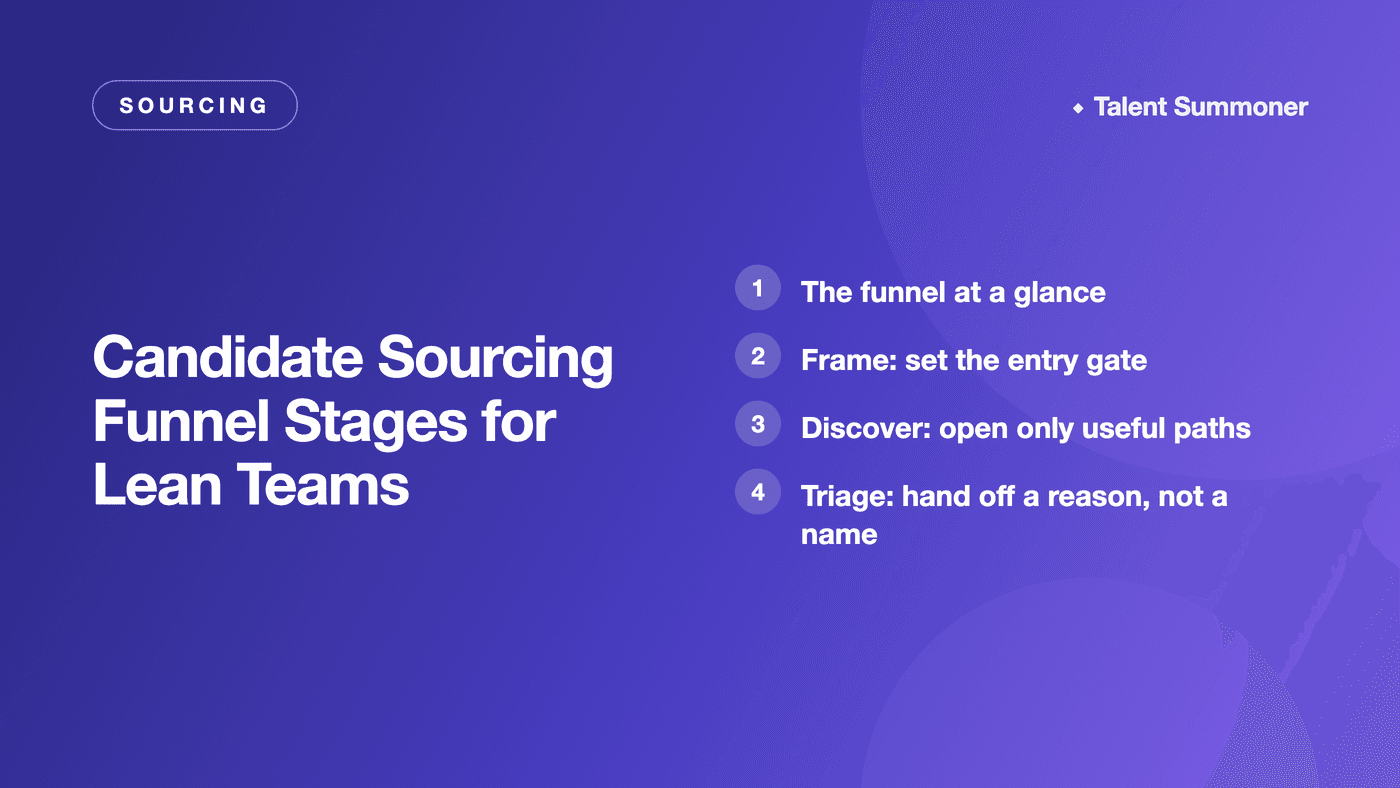
A founder's guide to candidate sourcing funnel stages, with the right input, owner, decision and stop condition for one urgent role.
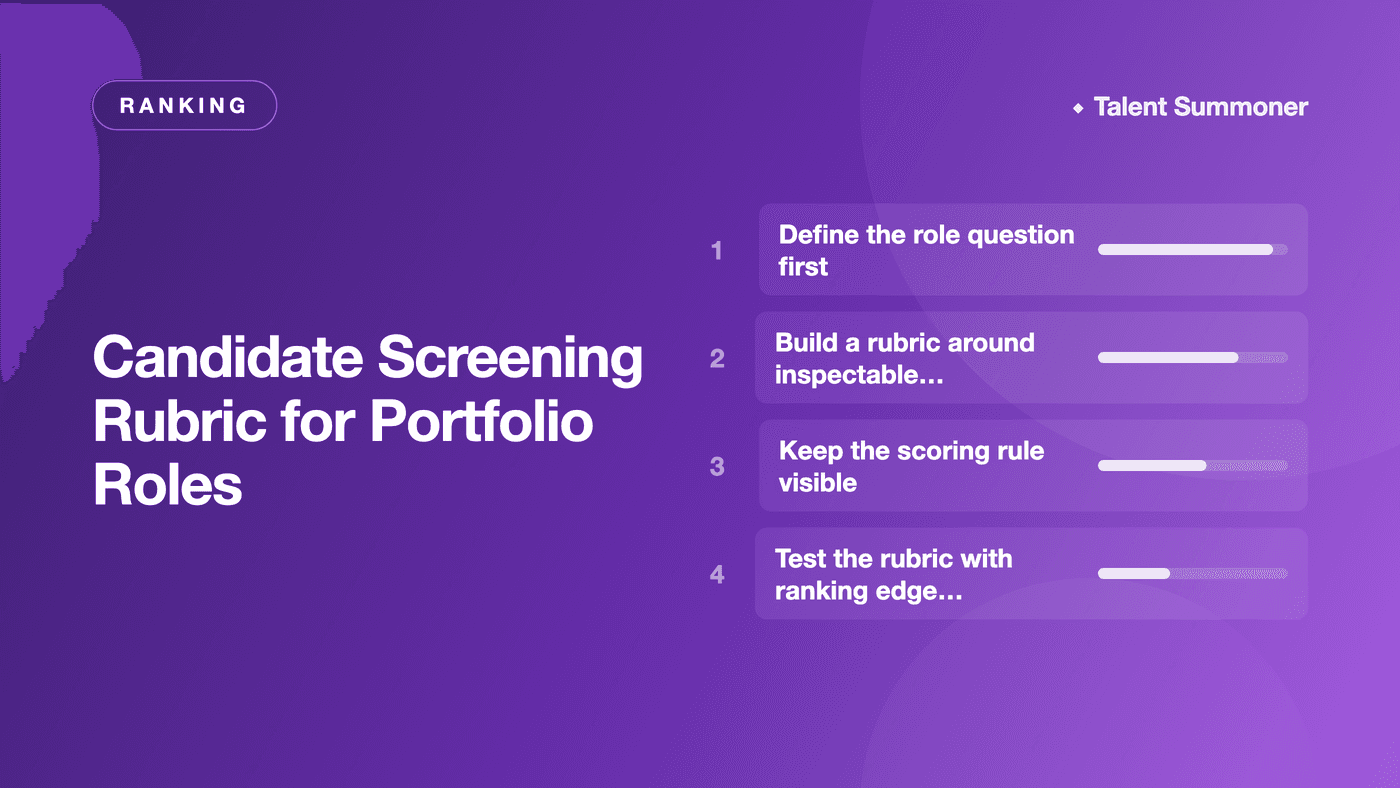
Build a portfolio-role screening rubric that separates job criteria from polish, keeps missing evidence visible and gives reviewers consistent next checks.
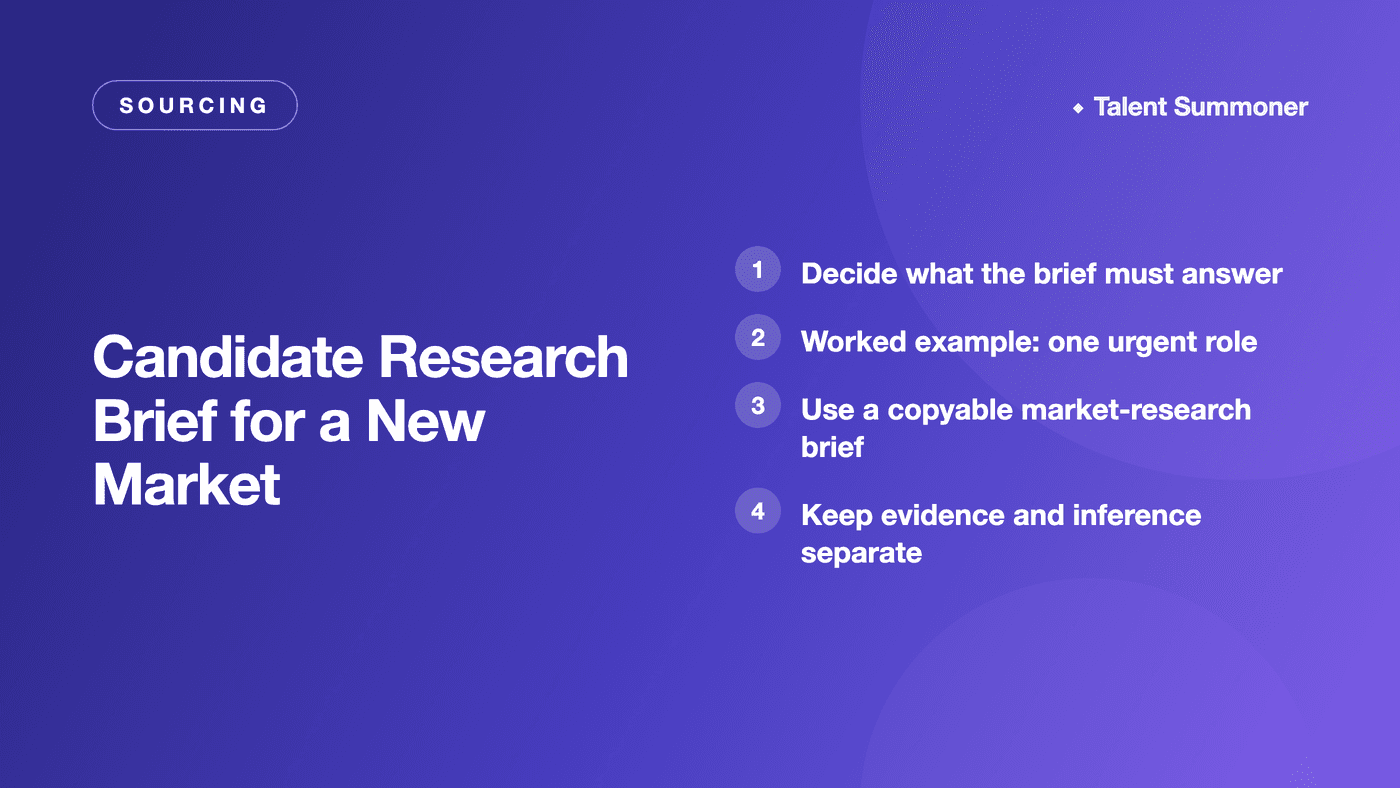
Create a candidate research brief before entering a new market, with testable assumptions, evidence limits, one owner and a clear stop condition.
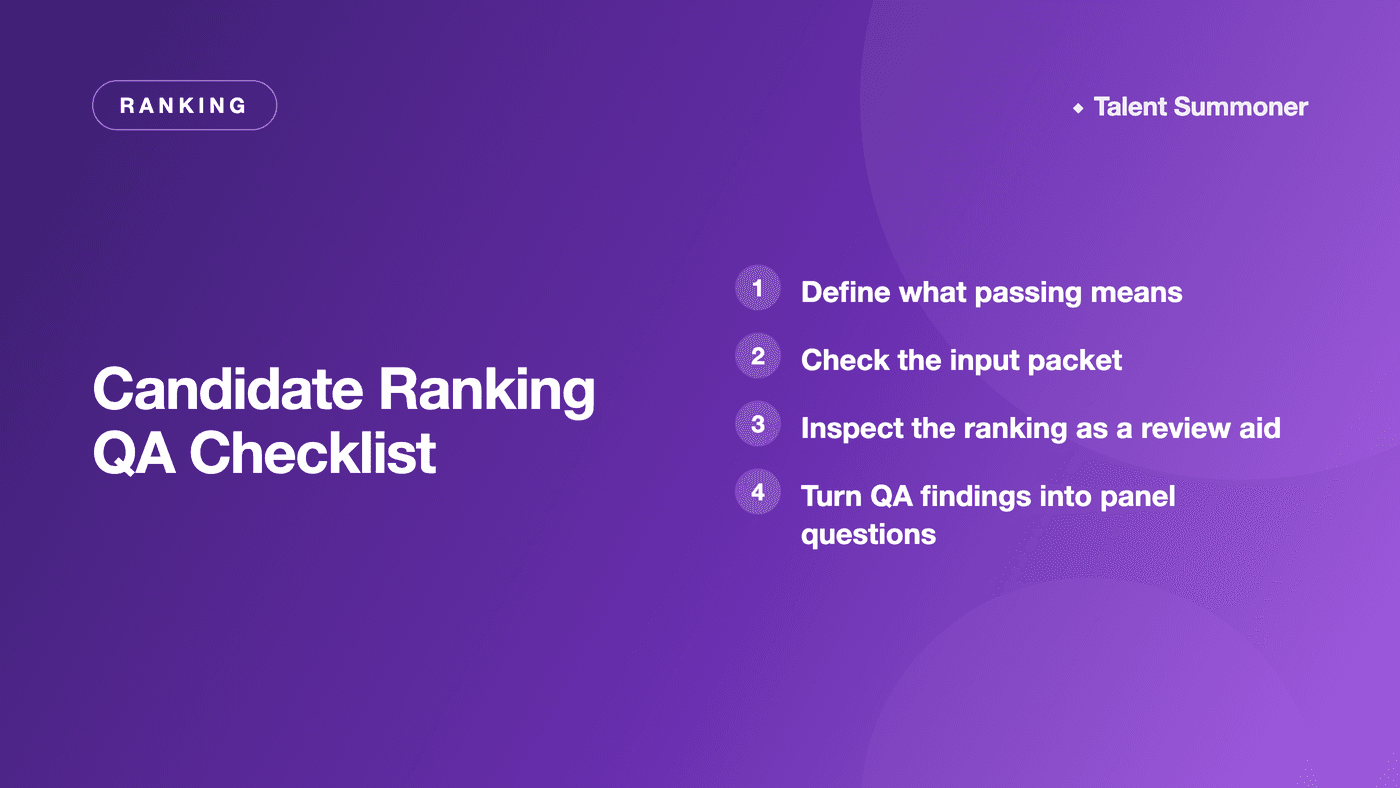
A practical candidate ranking QA checklist for panels: verify the role brief, candidate packet, evidence trail and review questions before calibration.
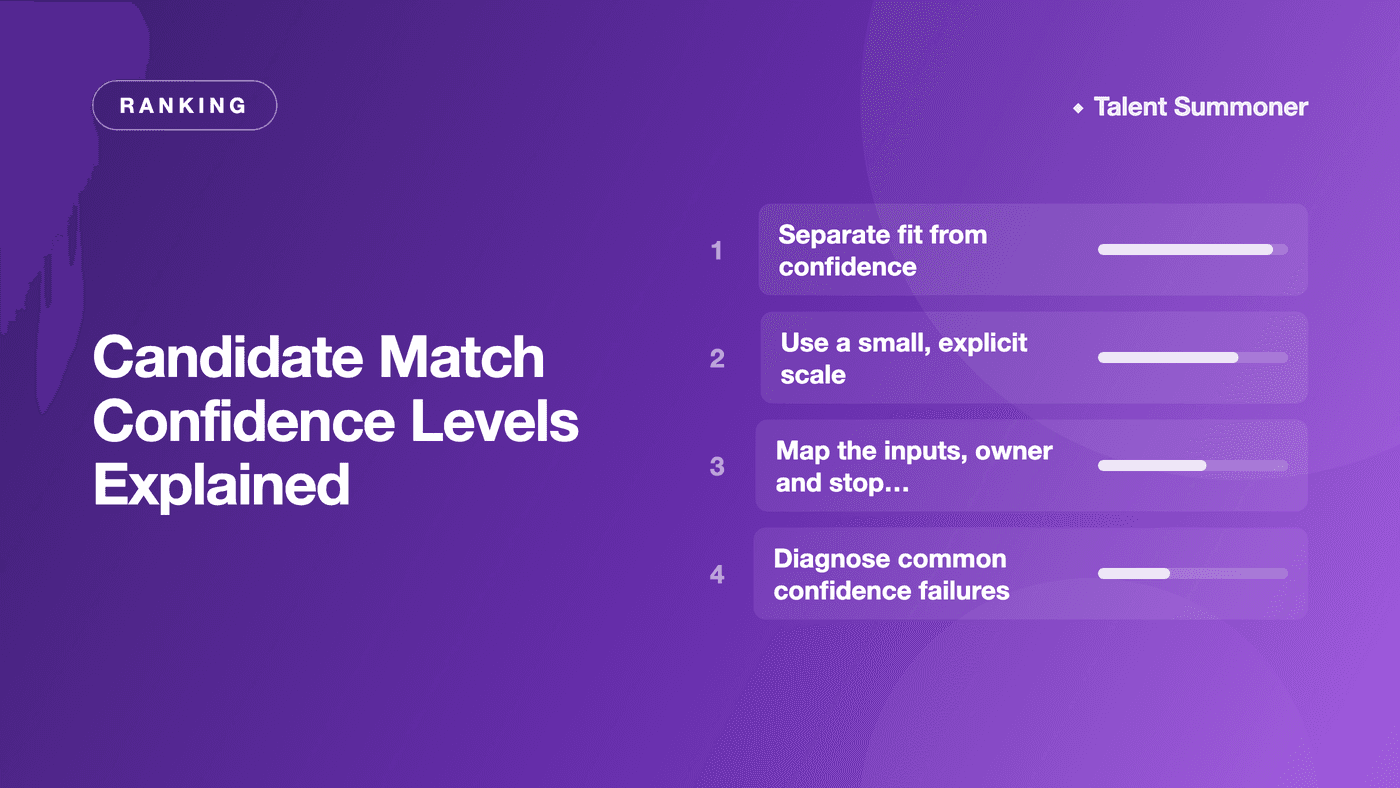
A practical guide to candidate match confidence levels: separate evidence strength from fit, assign review owners and set stop conditions.
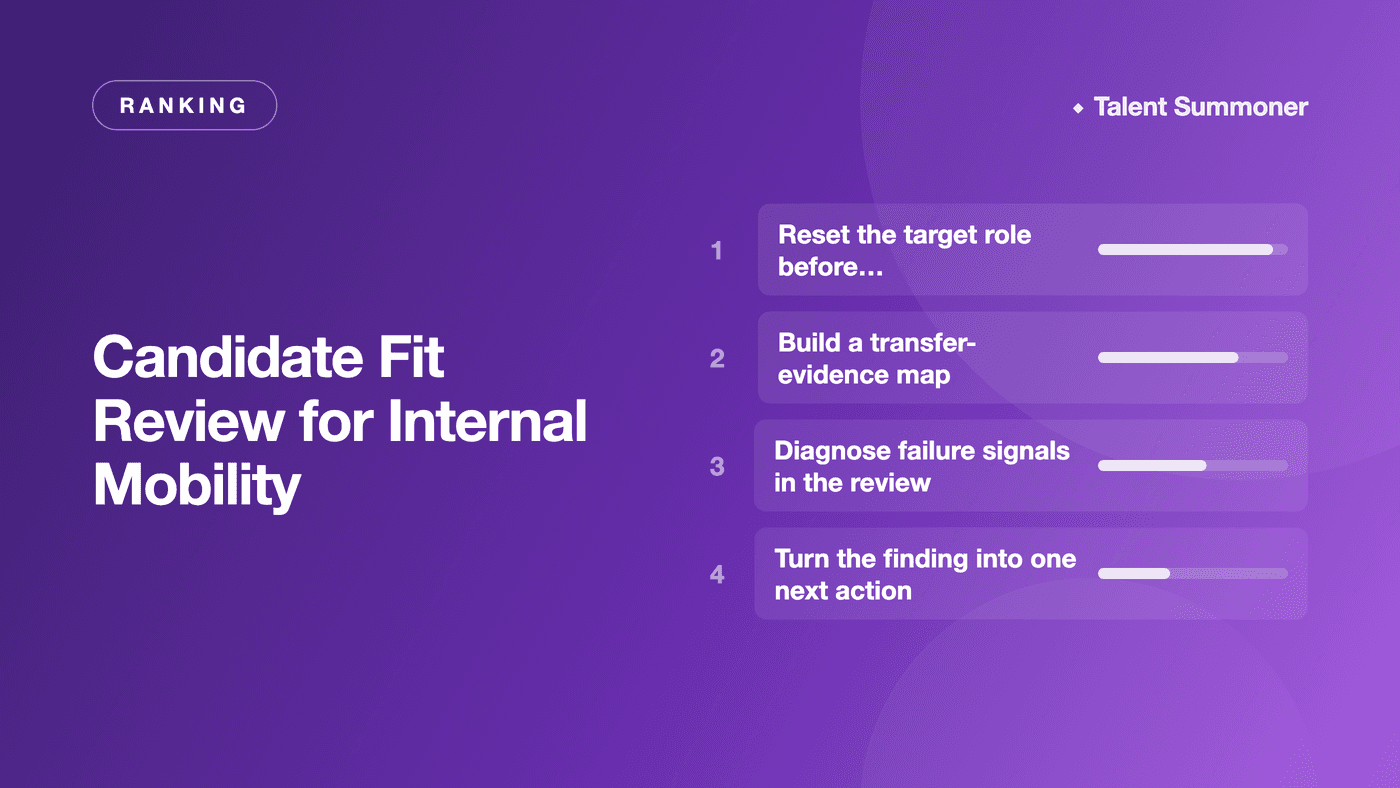
Review internal candidates against a new role with a transfer-evidence map, failure signals and a clear next action.
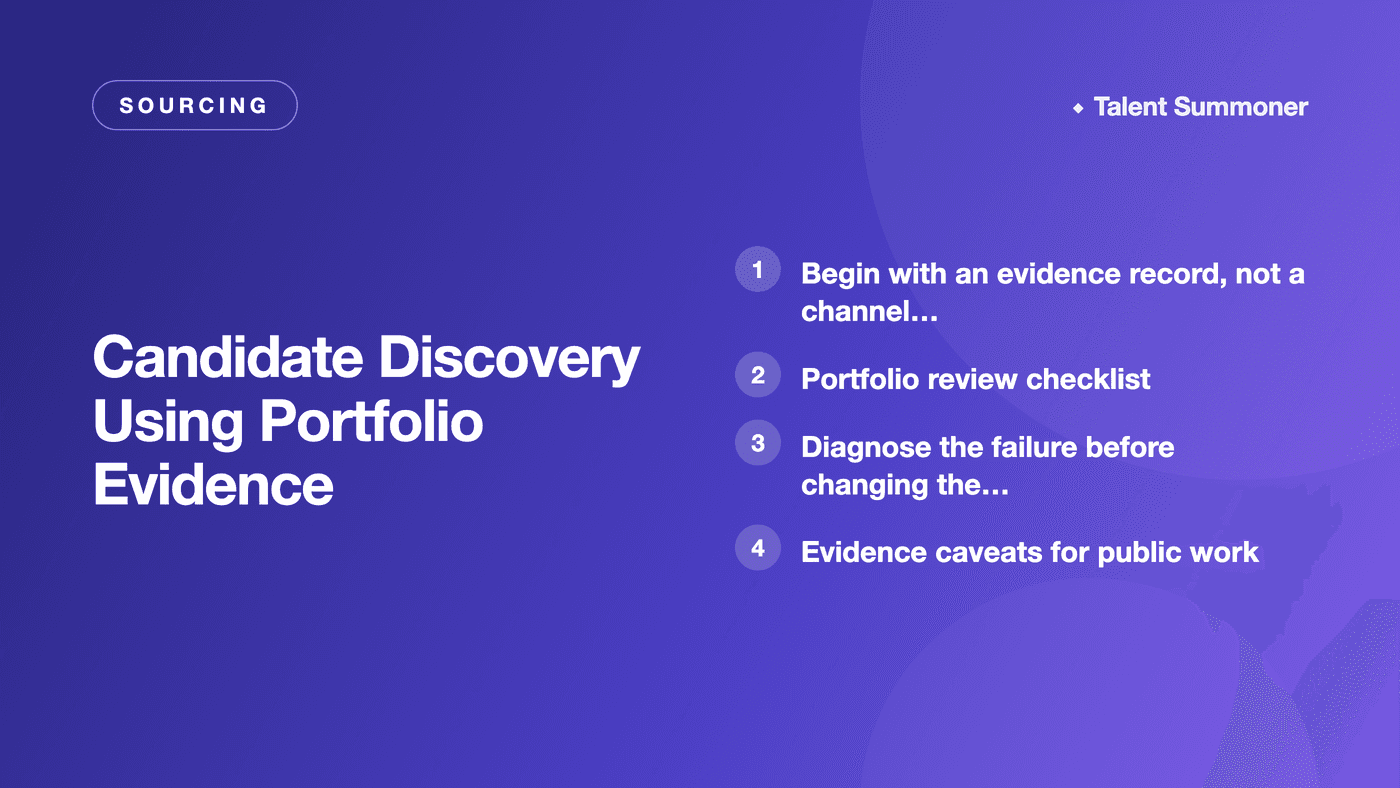
A practical review checklist for using portfolio evidence in candidate discovery, finding failure signals and choosing the next human check.

Run a practical candidate discovery retrospective with evidence, decision prompts and owners for the next sourcing pass.

Use a candidate comparison worksheet to capture independent panel ratings, resolve evidence disagreements and record a human-owned next step.
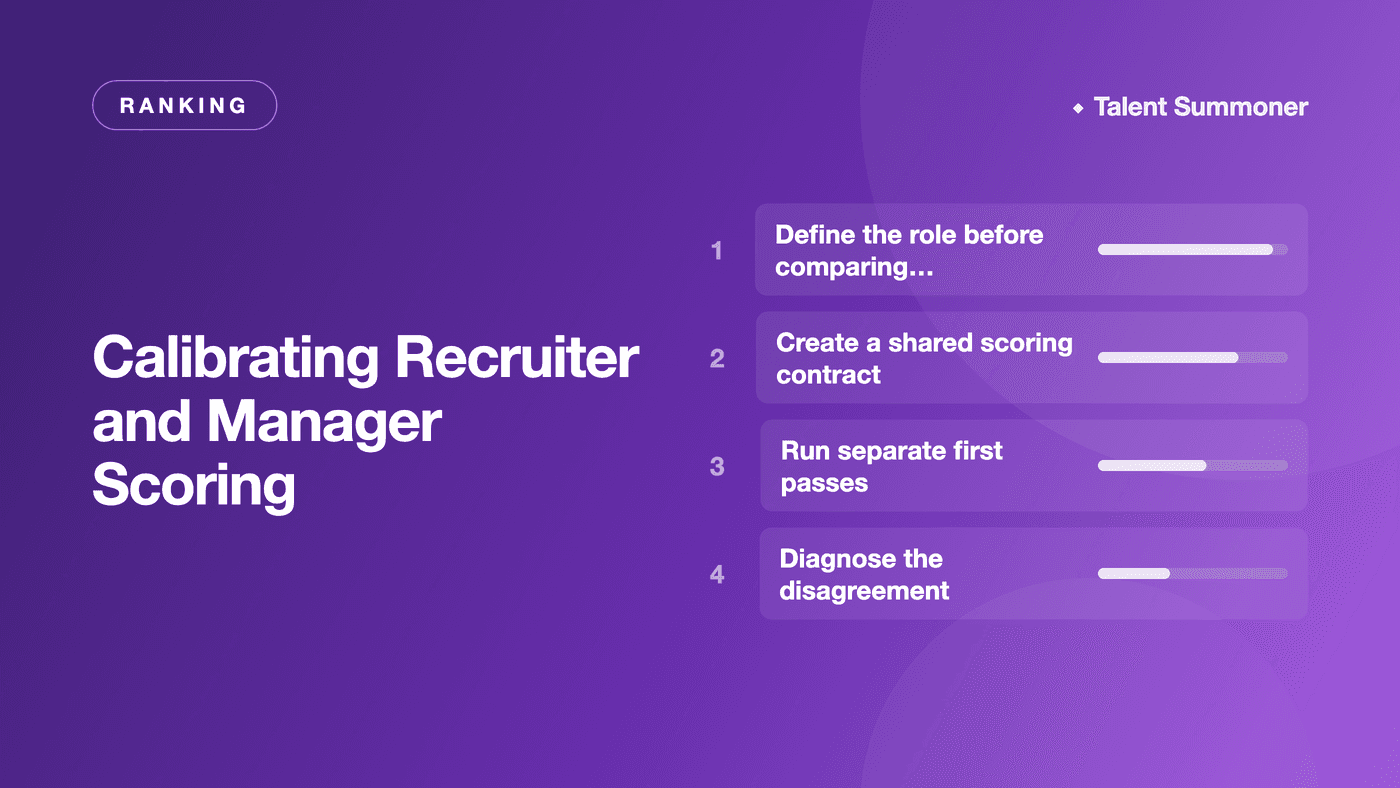
A decision guide for aligning recruiter and hiring manager scores around observable evidence, shared criteria and a human-owned next step.
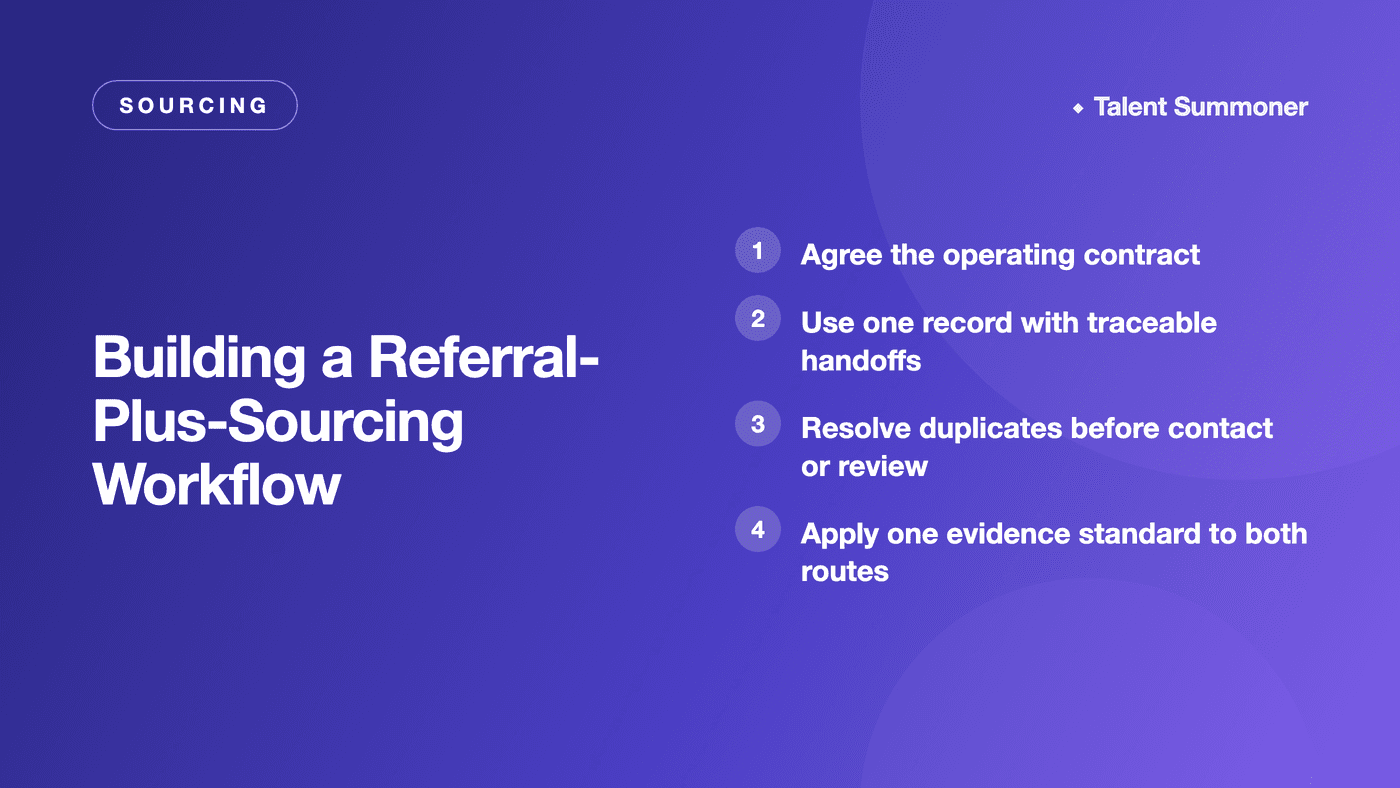
A planning playbook for combining employee referrals with outbound sourcing, assigning ownership, resolving duplicates and reviewing evidence.
Learn how coverage, relevance, evidence, route diversity, duplicate control and reviewer capacity shape candidate shortlist quality.
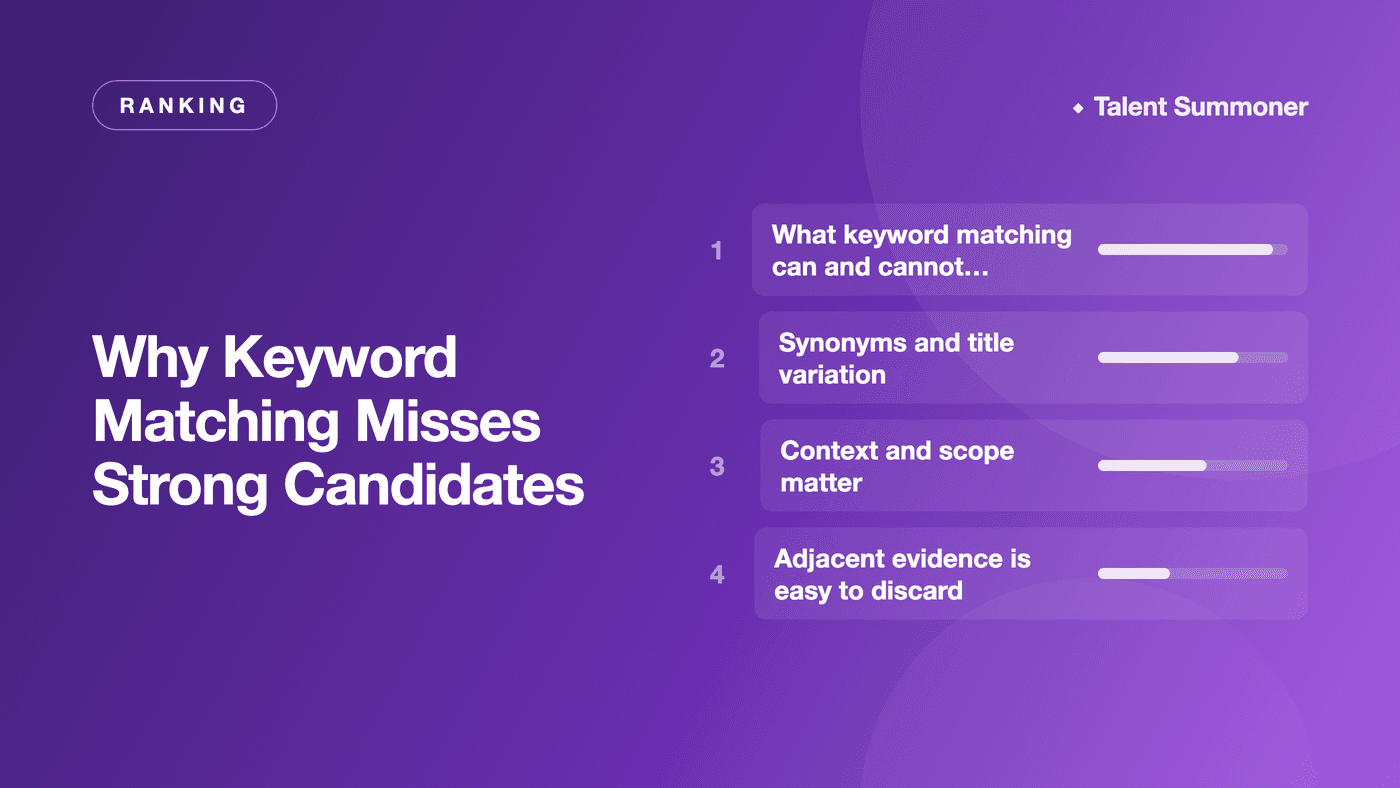
See why recruitment keyword matching misses relevant evidence, where it still helps, and how to combine it with controlled human review.

Diagnose unclear sourcing messages with a practical before-and-after example, review checklist and human-led next steps.
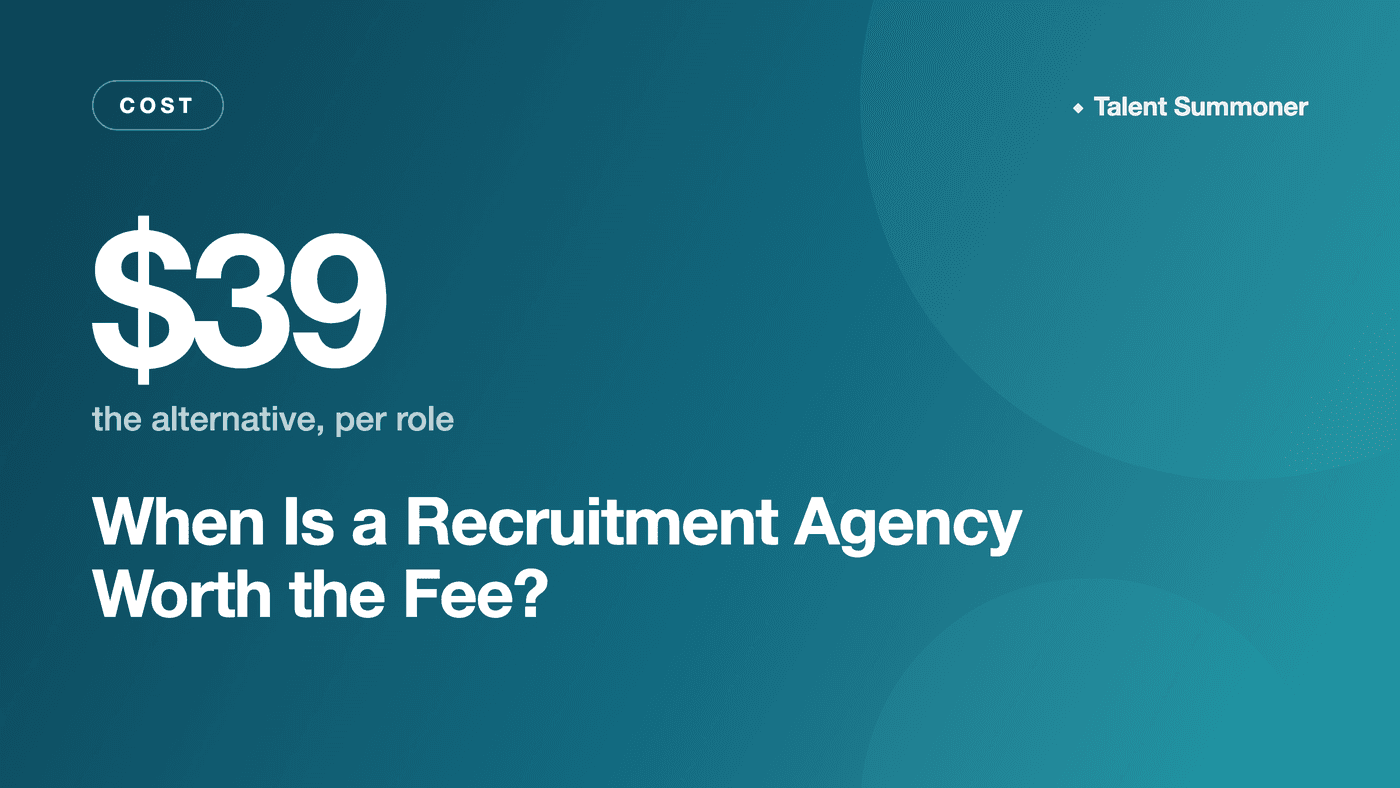
A practical framework for deciding when an agency's specialist reach or managed service justifies its fee, and what to confirm in writing.