 Talent Summoner
First 30 Days of a Founder Hiring Plan
A 30-working-day calendar for founders launching one approved role, with weekly gates, owners, evidence records and reset decisions.
Latest news and updates from our team
A 30-working-day calendar for founders launching one approved role, with weekly gates, owners, evidence records and reset decisions.
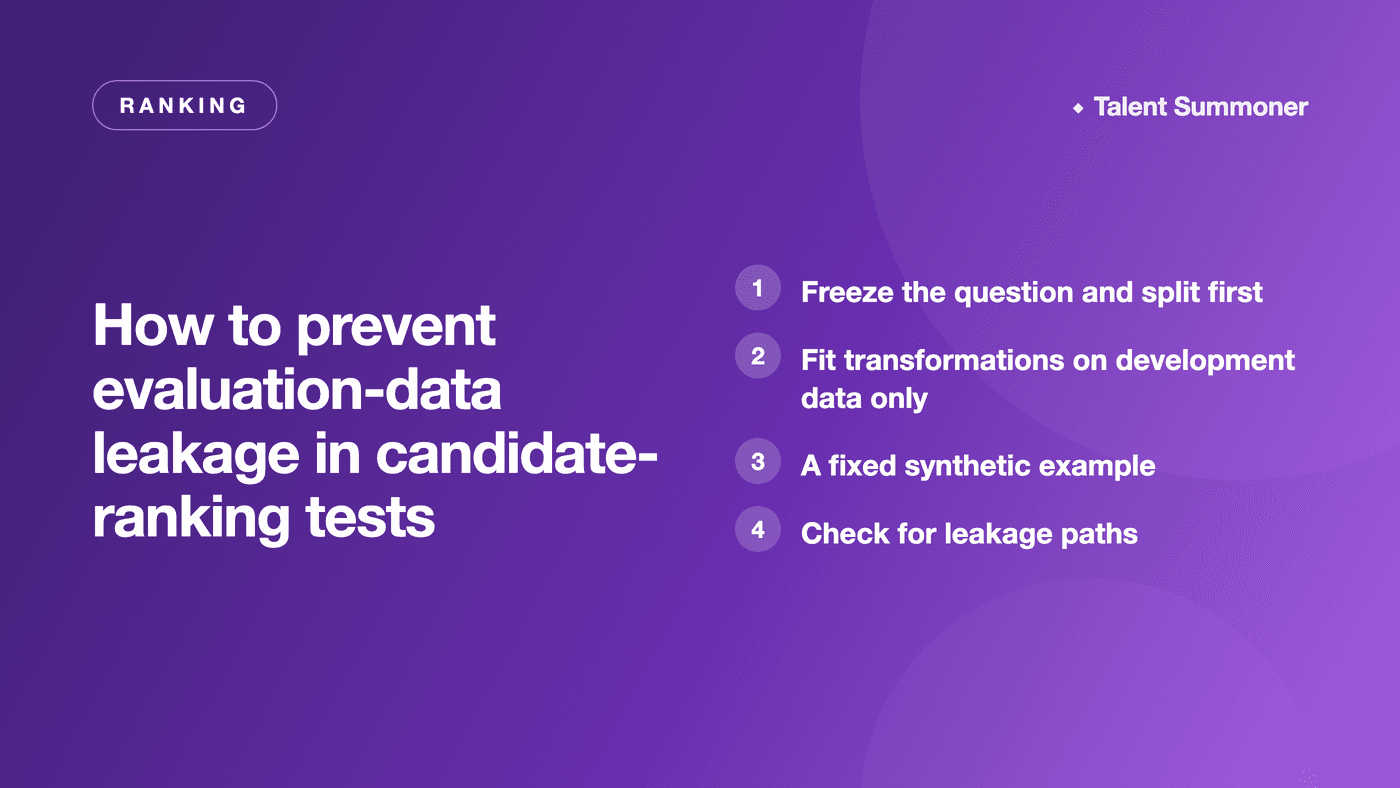
Use a fixed split, train-only transformations and a small synthetic fixture to keep candidate-ranking evaluation results honest.
A copyable template for organising several open roles without forcing candidates into one score, one owner or one next action.

A decision guide for sequencing respectful outreach to passive candidates, with clear inputs, human owners, verification boundaries and stop conditions.
Use a focused ATS pricing question list to expose seats, usage, implementation, renewal and data-exit terms before signing.
Model when an agency fee may break even against an internal or sourcing-tool route using placement assumptions, formulas and stop conditions.
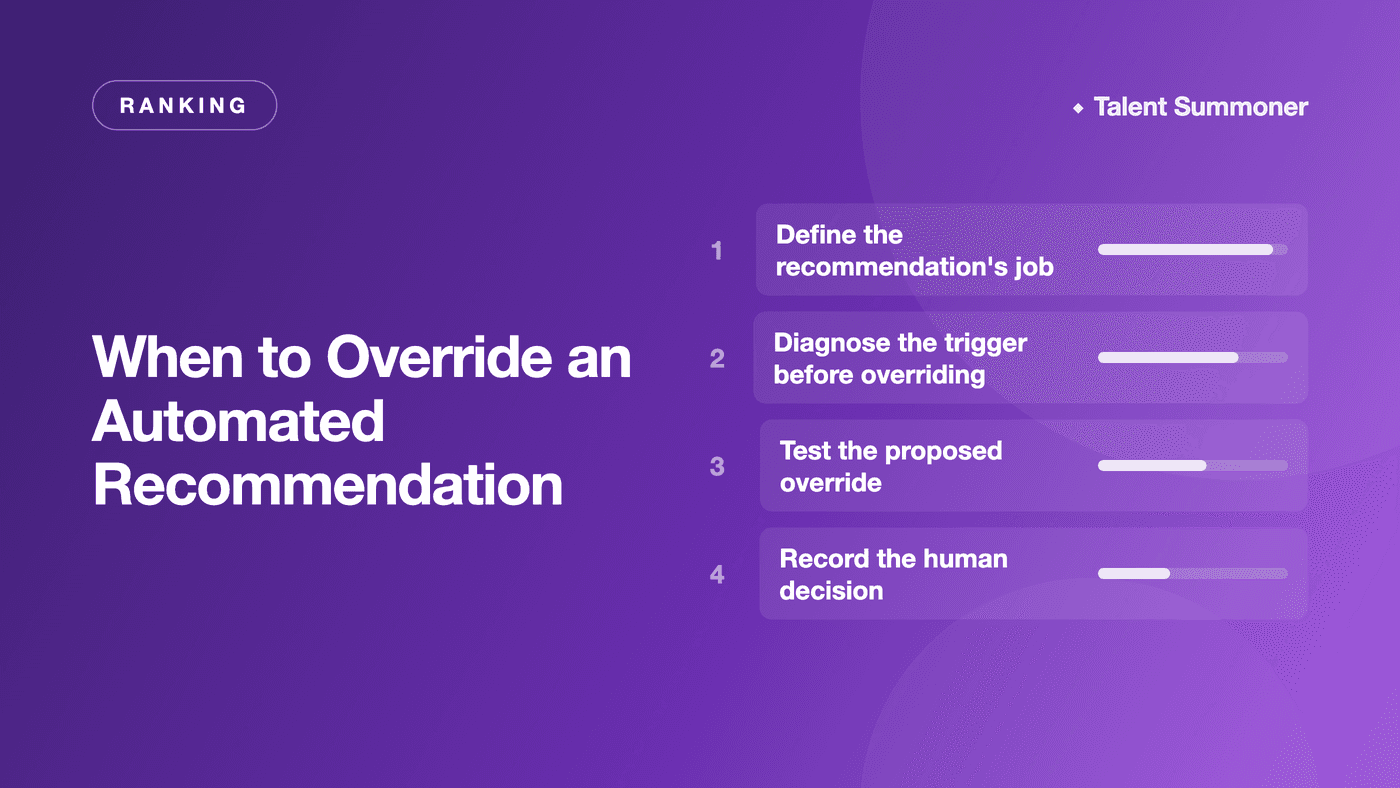
When should an internal-mobility lead override an automated recommendation? Use this guide to document the evidence and next step.
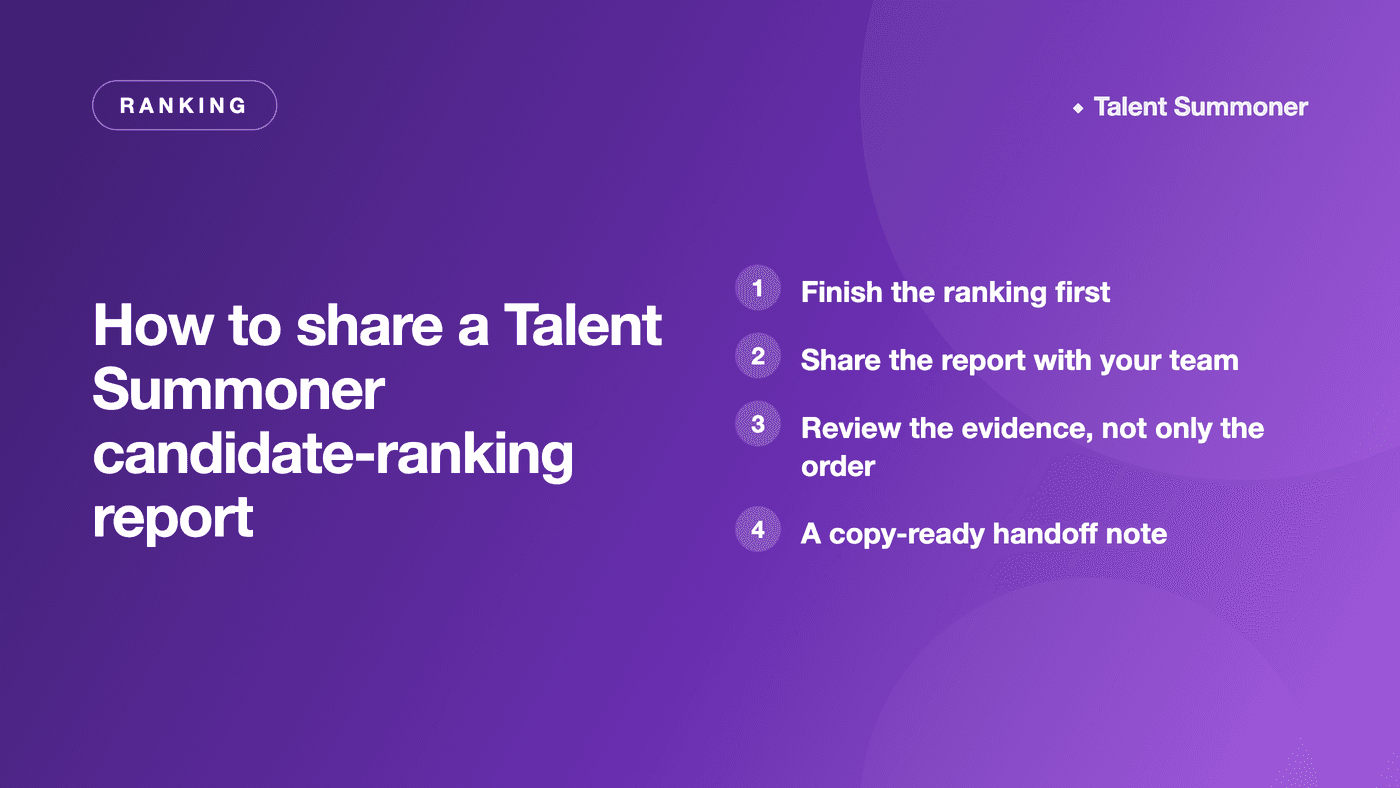
Upload a job description and CVs, inspect the ranked report, then share a link or PDF so teammates can review without an account.
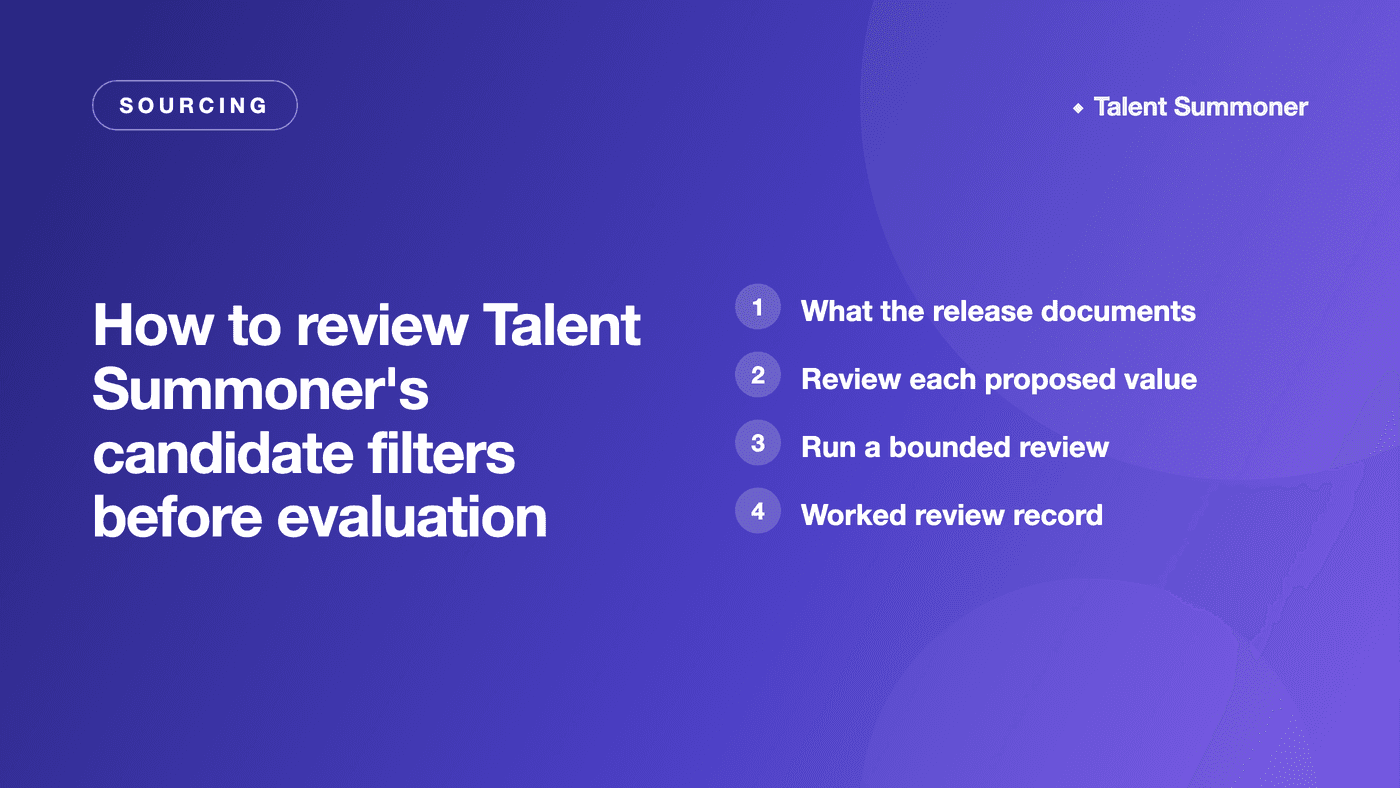
A practical guide to checking agent-proposed minimum score, source and city-level filters before a Talent Summoner search is evaluated.
Adapt a sourcing strategy for a confidential replacement hire with a neutral brief, source-quality audit and explicit evidence limits.
Run a focused two-week sourcing sprint in a new market with daily checkpoints, scope controls and clear exit decisions.
Transfer a founder-led sourcing effort to recruiter ownership with a context packet, decision rights, evidence handoff and first-week acceptance checks.
Source contract-to-permanent roles with clear status assumptions, evidence needs, candidate communication and HR or legal escalation points.
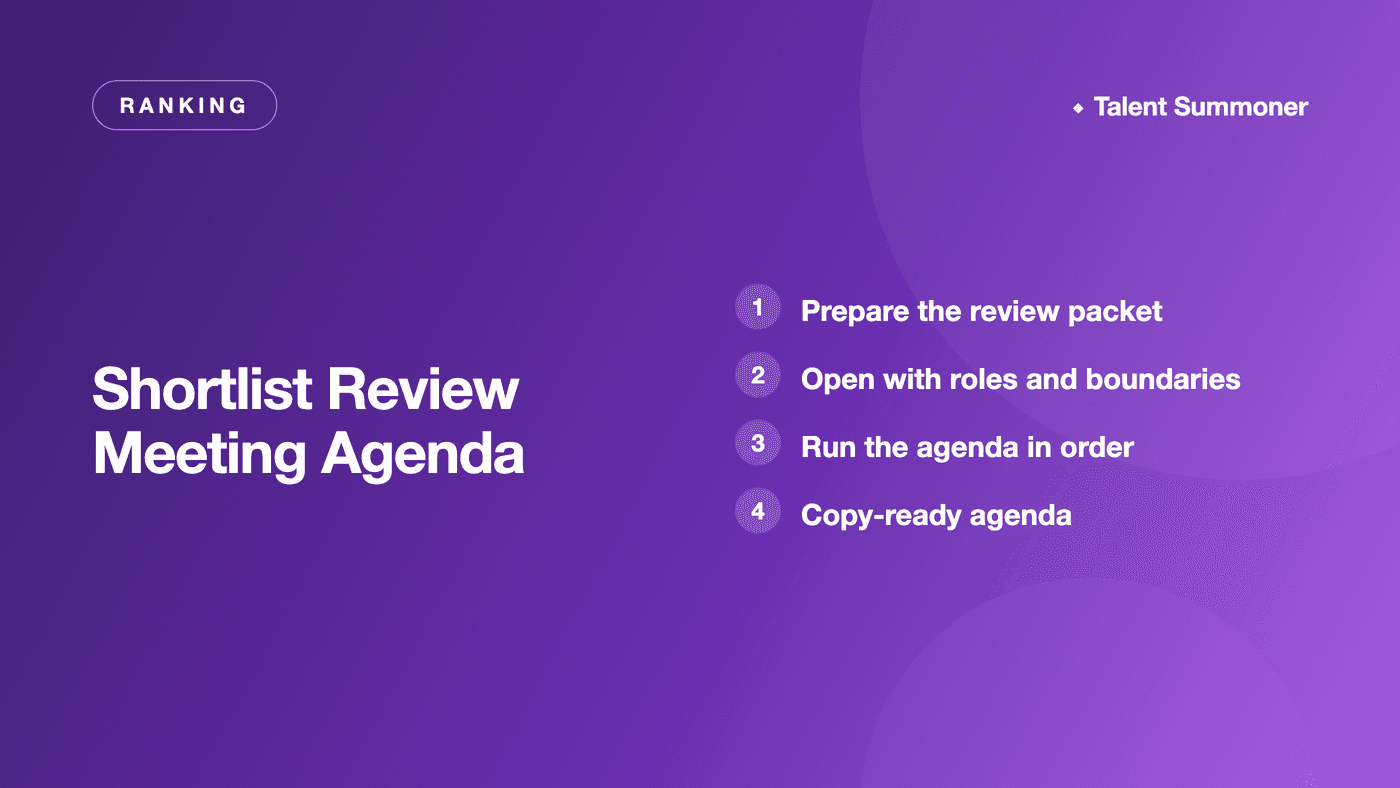
Use this shortlist review meeting agenda to test candidate evidence, expose assumptions, assign follow-ups and record a human-owned next step.
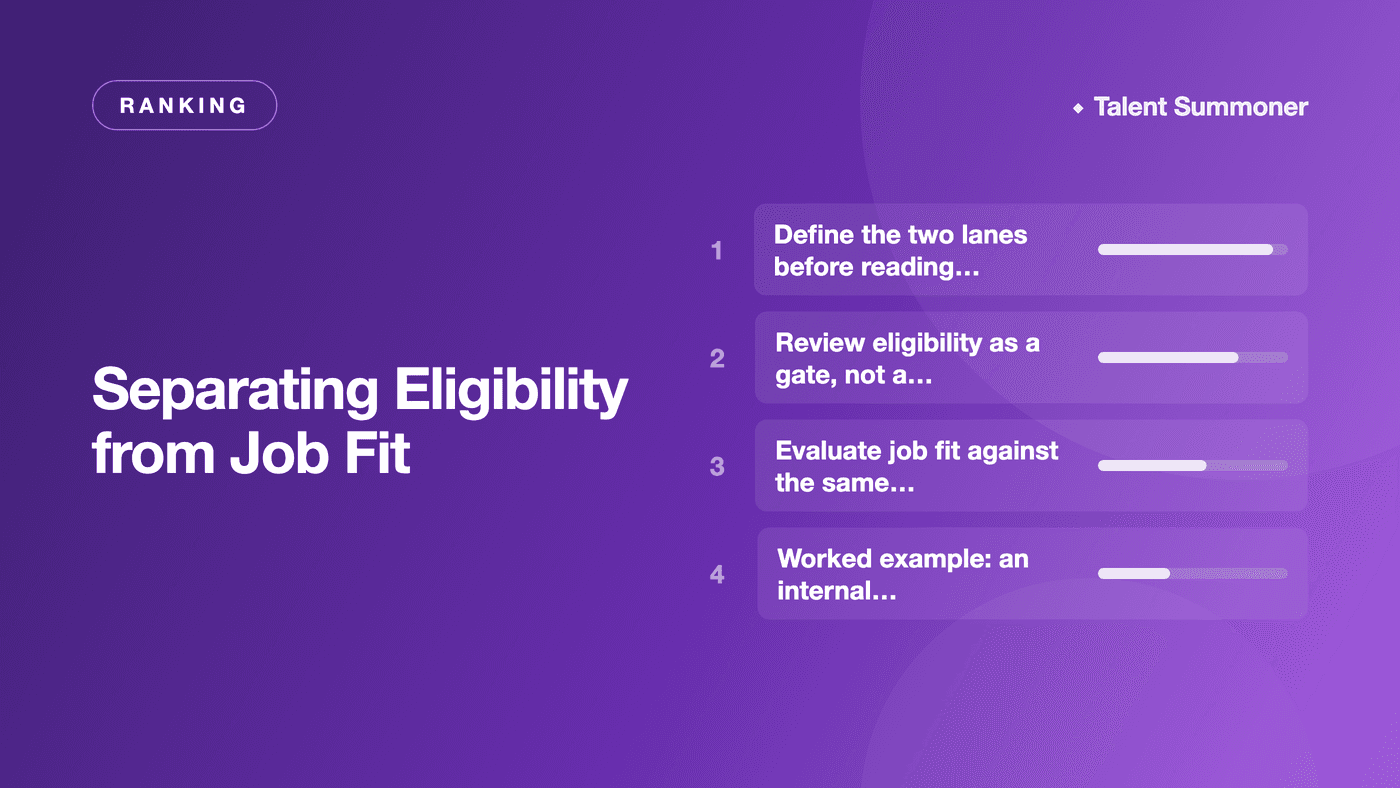
A worked guide for internal-mobility reviews that separates eligibility gates from job-fit evidence and assigns a clear next action.
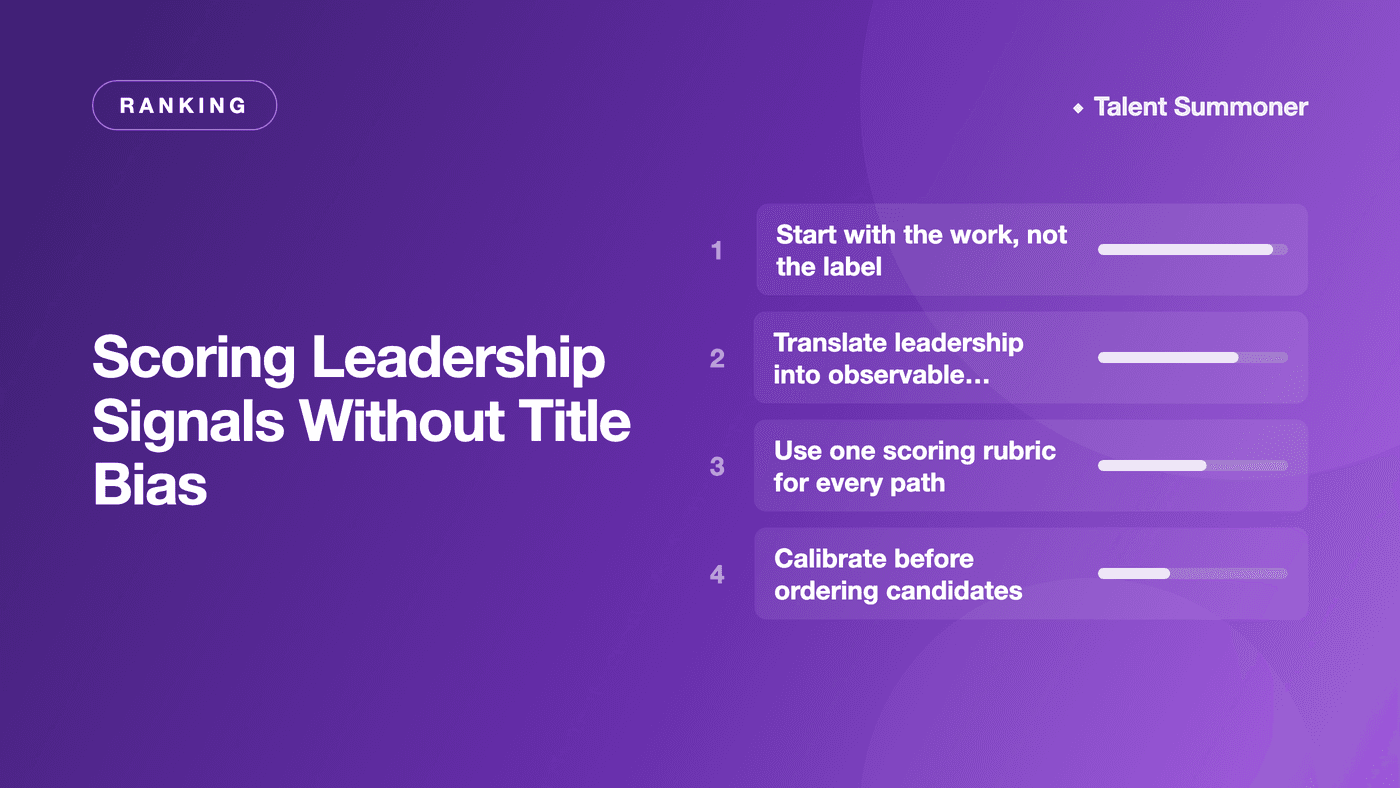
A practical guide to evaluating leadership through observable work evidence, using the same role criteria for managers and individual contributors.
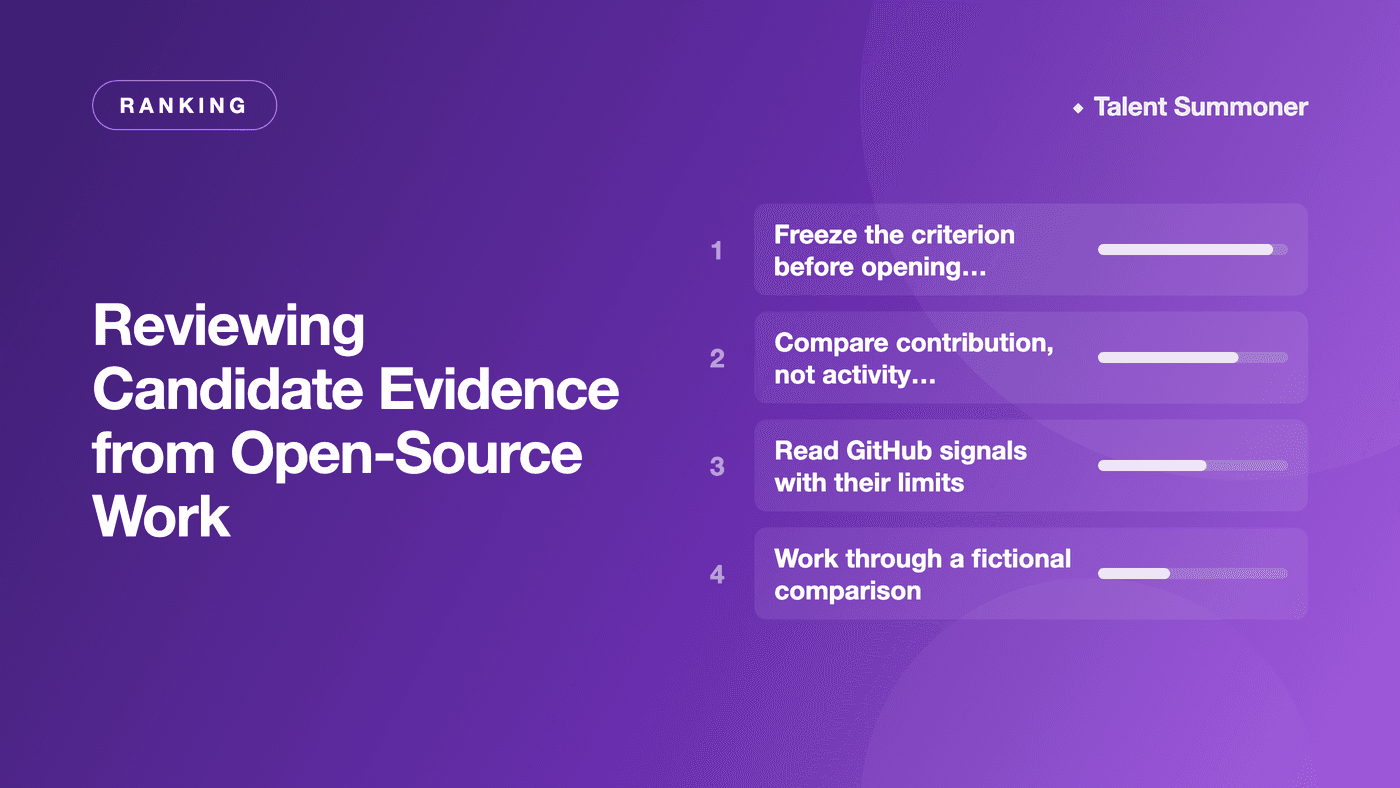
A decision guide for comparing open-source work across a close shortlist, separating visible evidence from assumptions and choosing the next check.
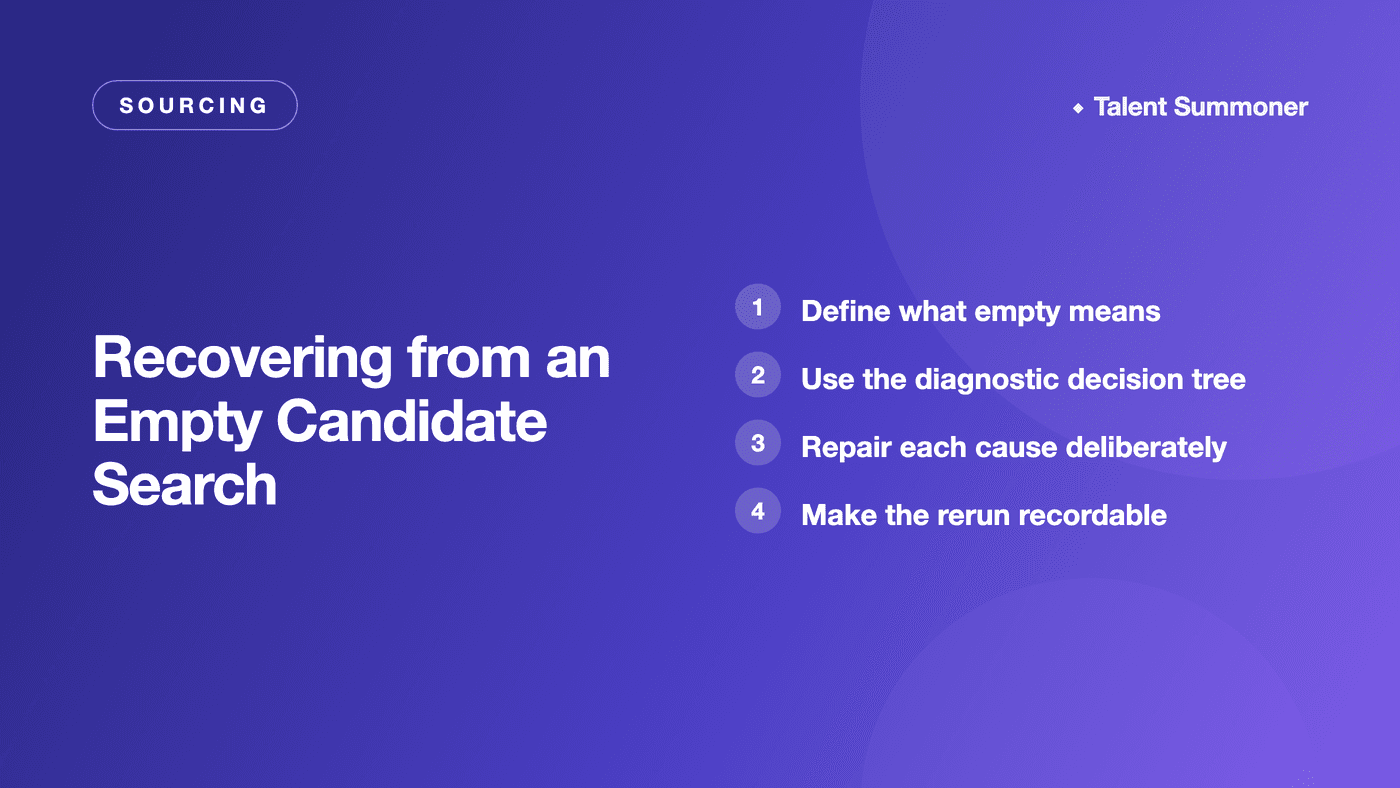
Diagnose an empty candidate search before rerunning it: separate brief defects, market constraints, evidence gaps and scope changes.
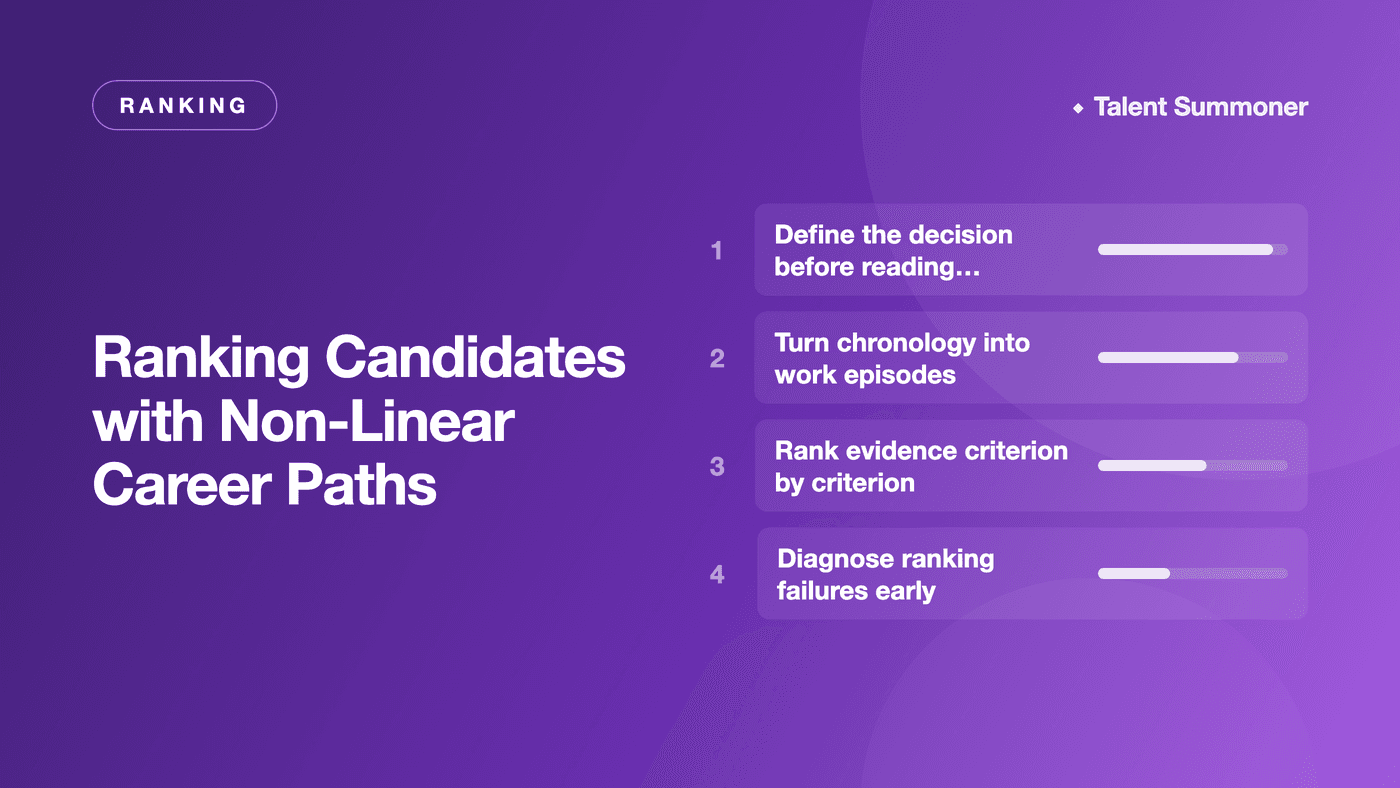
A practical runbook for reviewing non-linear career paths, separating chronology from evidence and correcting ranking failures before a decision.
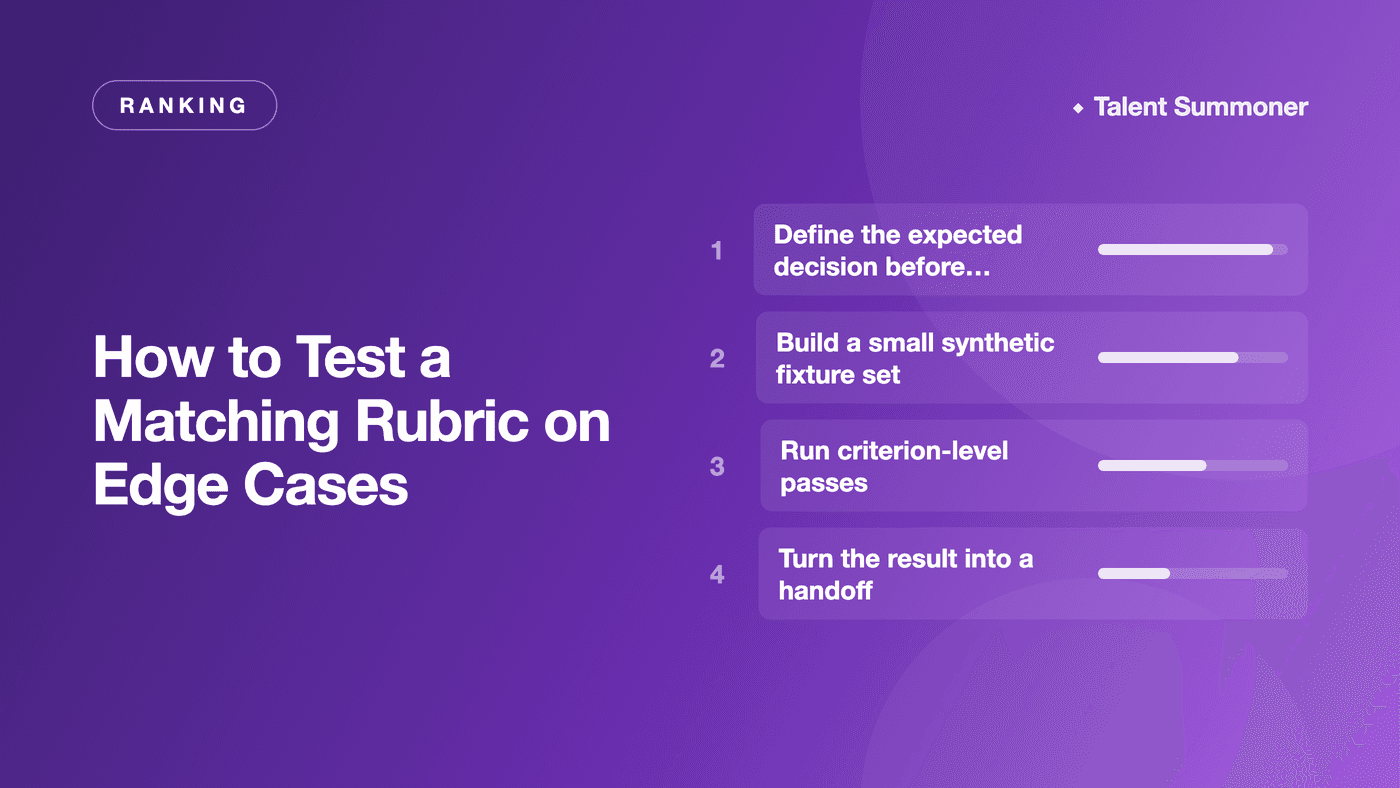
Use synthetic edge cases to test a candidate matching rubric, expose rule failures and hand off a human-owned correction before reviewing a close shortlist.
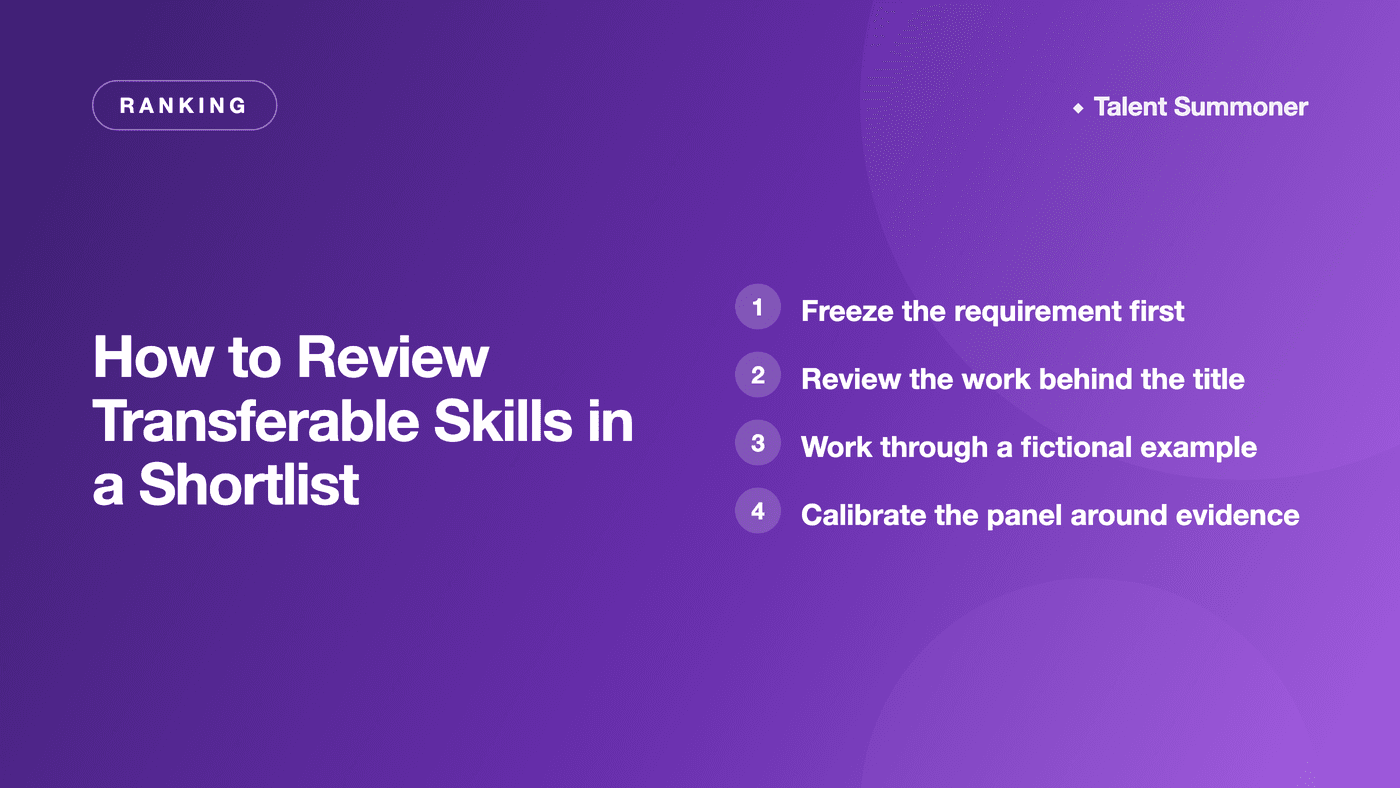
A panel-ready method for comparing transferable skills in a shortlist, separating evidence from assumptions and recording the next check.
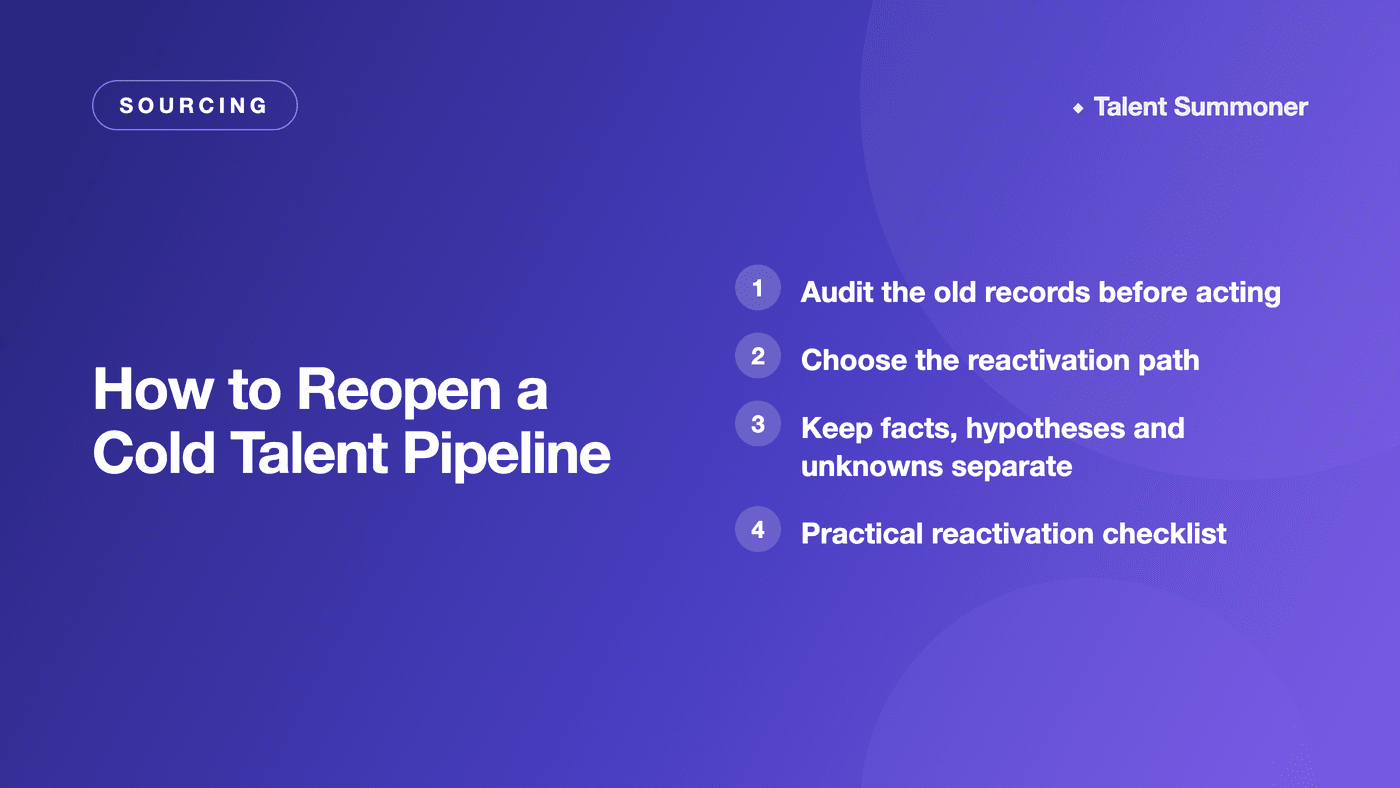
A founder's runbook for classifying stale candidate records, choosing a safe reactivation path, documenting unknowns and knowing when to stop.
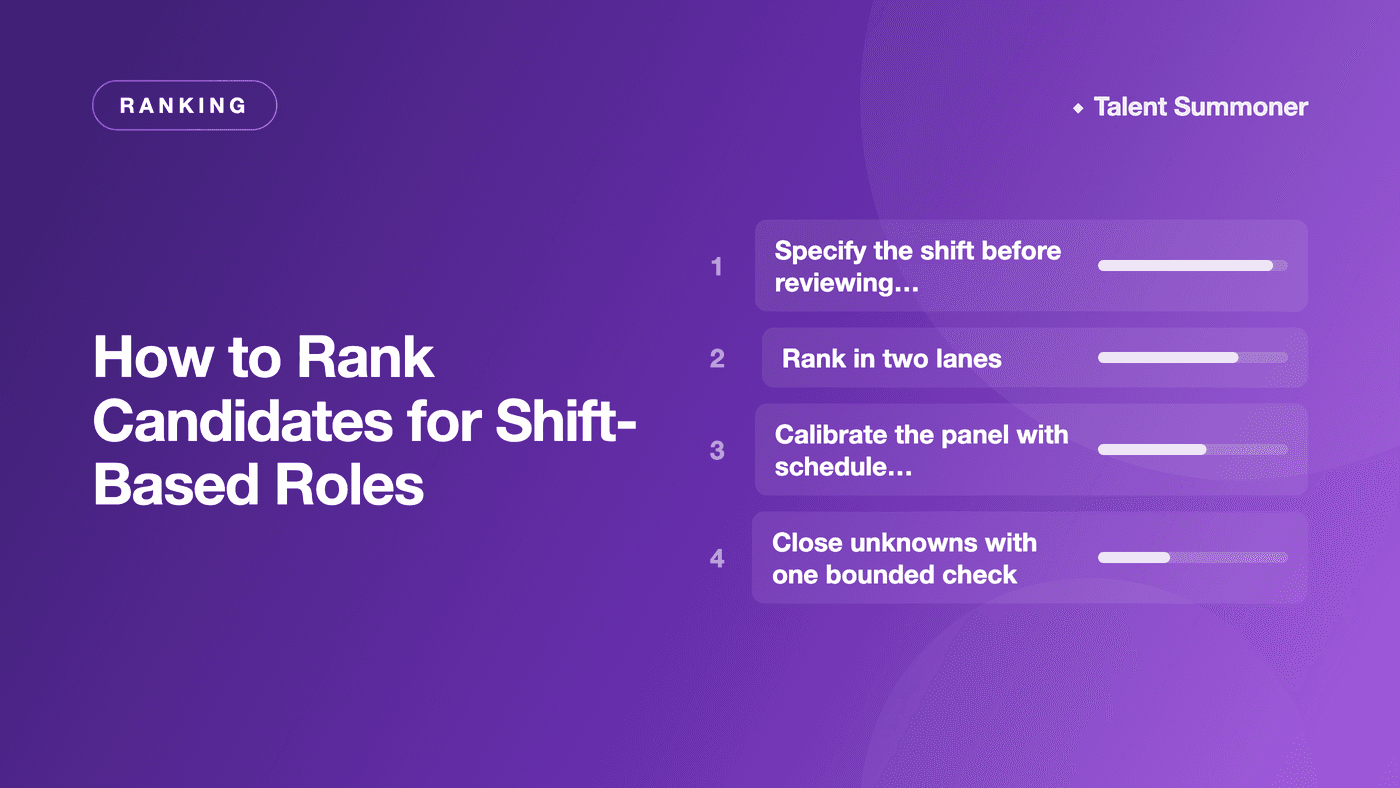
A practical guide to separating shift requirements from skill evidence, calibrating a panel and recording schedule checks without guessing availability.
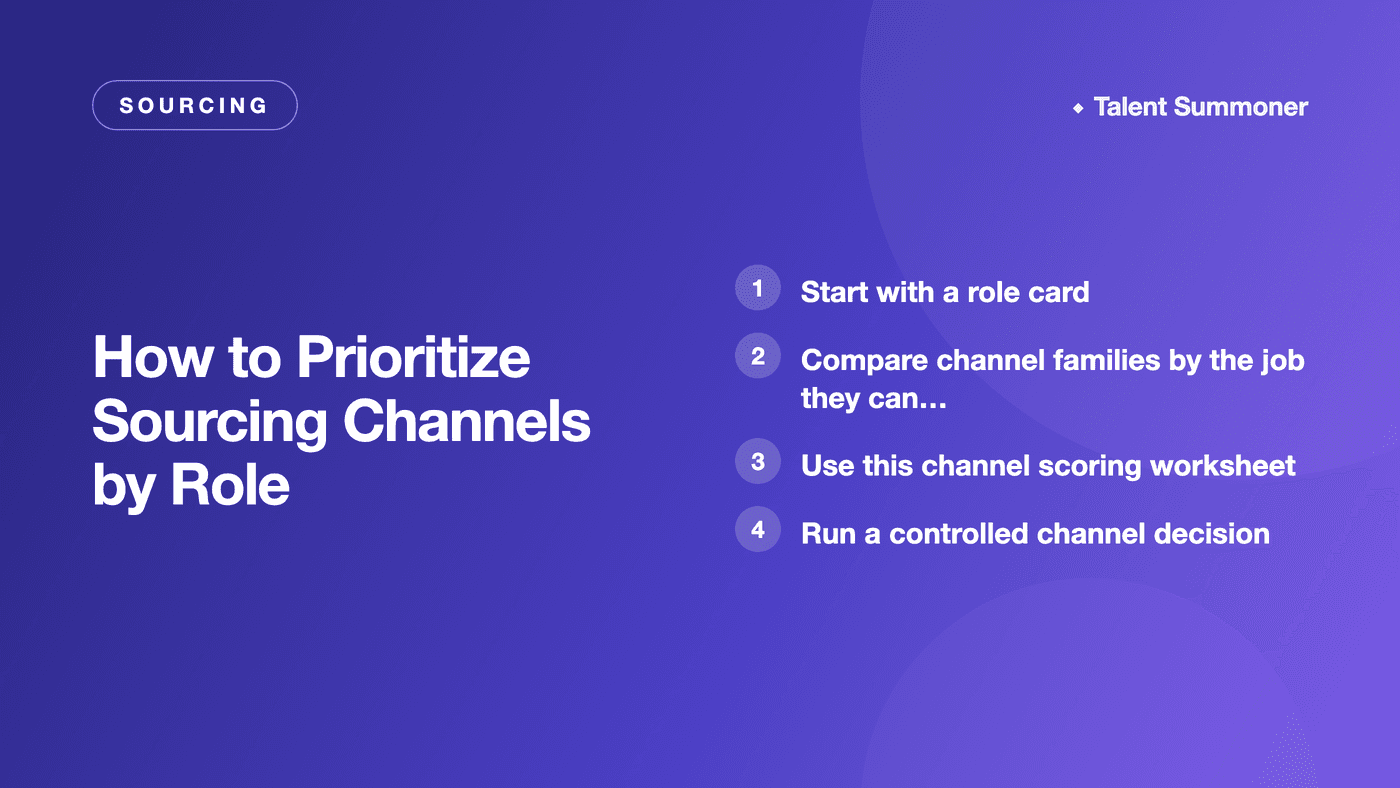
A practical worksheet for choosing sourcing channels by role fit, evidence quality, reach, review capacity and clear stop rules.